ArtPlay Academy

Redesign of piano education platform for engagement and course completion

Key Wins:

Increased course completion by 60% through behavioral design and gamified progression.

Repositioned a 600+ student piano school into a scalable, productized learning platform with 3500+ active users

Led end-to-end product delivery from concept to launch

Designed the core engagement and monetization system supporting long-term retention.

Redesigned a Traditional Piano School into a Gamified Learning Platform

ArtPlay Academy is a piano school with over 500 students facing low engagement and high drop-off common to traditional music education.

As digital learning competes for attention, the challenge was sustained motivation, practice consistency, and creative confidence.

This project focused on transforming a conventional curriculum into a gamified, community-driven learning platform designed to improve completion, retention, and creative expression.

Objectives:

  • Transform a 500+ student piano school into an interactive, gamified learning platform.

  • Design systems that increase practice consistency, engagement, and course completion.

  • Integrate commerce, community, and progression into a single product experience.

  • Support creative expression through structured play, challenges, and peer interaction.

Challenge:

  • Lead a cross-functional team of 4 through concept, design, and development.

  • Translate a Duolingo-style gamification model into a music-learning context without trivializing the content or effort required.

  • Align product design, pedagogy, and marketing under a single engagement system.

  • Ship a public beta under real-world constraints of time, budget, and legacy curriculum.

My ROle:

Product Manager

Product Ownership

I owned the end-to-end product lifecycle, partnering directly with the founder to redefine the business from a traditional piano school into a scalable digital learning platform.

This included problem framing, product strategy, system design, and launch.

Engagement Systems:

I translated educational goals into product systems designed to drive motivation, practice consistency, and course completion.

Key responsibilities included:

  • Designing the core gamification and progression model

  • Defining engagement loops aligned with learning outcomes

  • Structuring monetization and content access without harming intrinsic motivation

  • Ensuring consistency between product design, narrative, and marketing

Delivery and Execution

I led a cross-functional team of 4 through concept, design, development, and public beta launch.

This involved prioritization under real constraints, close collaboration with design and engineering, and continuous iteration based on user feedback during beta testing.

The Process to shape a meaningful customer experience:

One of the main reasons why people play games is that they follow a narrative that gives purpose to the actions to take, plus there are multiple feedback indicators telling you how you are playing, how to improve and rewards that validate your efforts.

We started by implementing a brand narrative, in which the “player” was once the greatest pianist of a distant land, until an envious wizard casted a spell that made the player forget all their memories…

Now the player must embark in a journey throughout the 12 different kingdoms (one for each musical scale) and with the help of different characters regain their musical voice to be the great pianist they once were.

Main game features:

– A main gameplay consisting of 7 levels, which is a structured lesson plan to learn how to play the piano from beginner to advanced.
– An “open world” mechanic where students can create their custom practice routines, based on instructor recommendations or completely new based on the students interests.
– Community Areas were there are possibilities of getting accountability partners, mentors, monthly challenges and peer support.
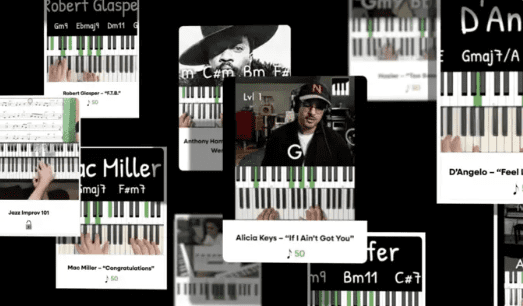
– A  library of content where users can trade “Tips” which serve as the in-game currency that they earn for completing content and interacting with the community.

The Why, How and What
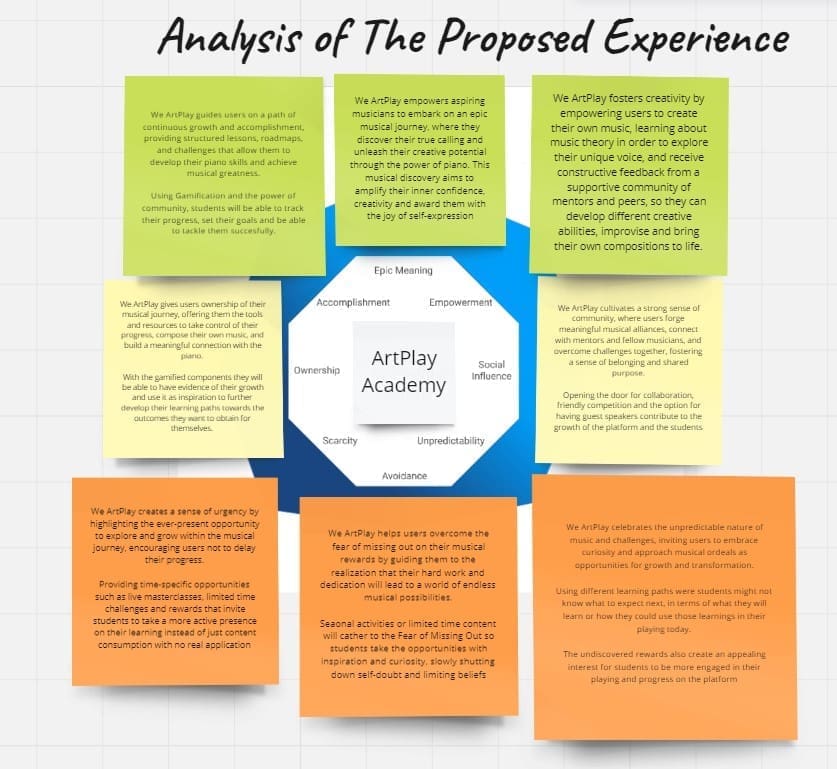
Analysis of the Proposed Experience with the Octalysis Framework (Impact on the 8 Core Drives of Human Motivation and Behavior)
The Strategy Dashboard of a Gamification Design System

Competitor Analysis

Insights From Research:

Those three business models were selected to perform the main competitor analysis.

We have seen how effective community platforms are for learning piano in diverse genres that go from pop to jazz to classical.

Something we noted is that they either follow a very strict structure with no freedom at all or they are too much of a free-form platform, with no space in between.

Also any gamification component found on the diverse platforms is too basic to be considered gamification, so we wanted to expand our offer having a storyline or mission for students, plus a game economy to reward students for their efforts and diverse activitites to spice up the learning curve and community areas.

PLAYER TYPES

Using Richard Bartle's Player Types Theory to Define the different types of Artists
The Four Artist Player Types with their motivations, desires and fears

INSIGHTS FROM RESEARCH

As a musician myself with over 10 years in the Music Industry both as performer and  as educator I have plenty of insights for the needs and struggles of music students.

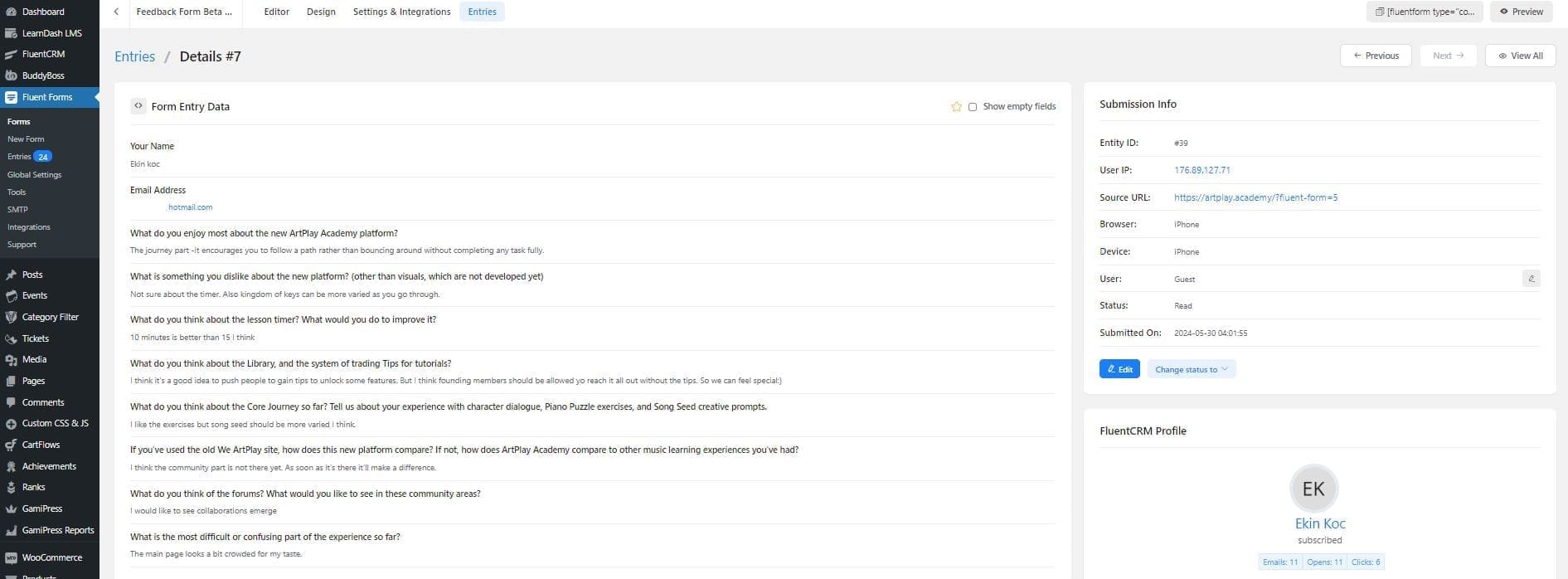
We conducted a comprehensive UX Research process to understand the desires, motivations and fears of the students of the old platform, after running a series of focus groups, user interviews and email surveys we identified the reasons why students want to learn the piano and the obstacles they face in the way.

Also we were able to ask them about different features we were adding to our roadmap and asked them for opinions and they also provided some ideas that later on went to be implemented as those were regularly asked for in those feedback sessions.

Focus groups were made with members of the existing platform to understand their motivations, goals and brainstorm different features for their ideal platform

STARTING THE DESIGN

INSIGHTS FROM THE IDEATION STAGE:

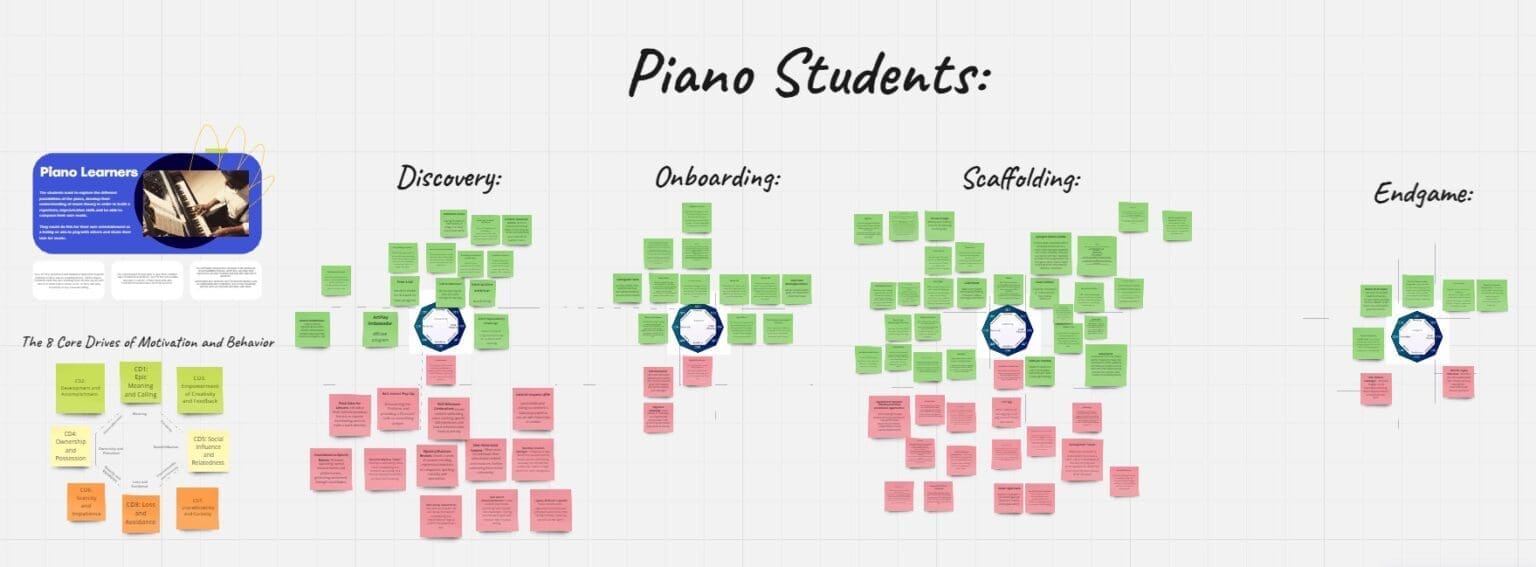
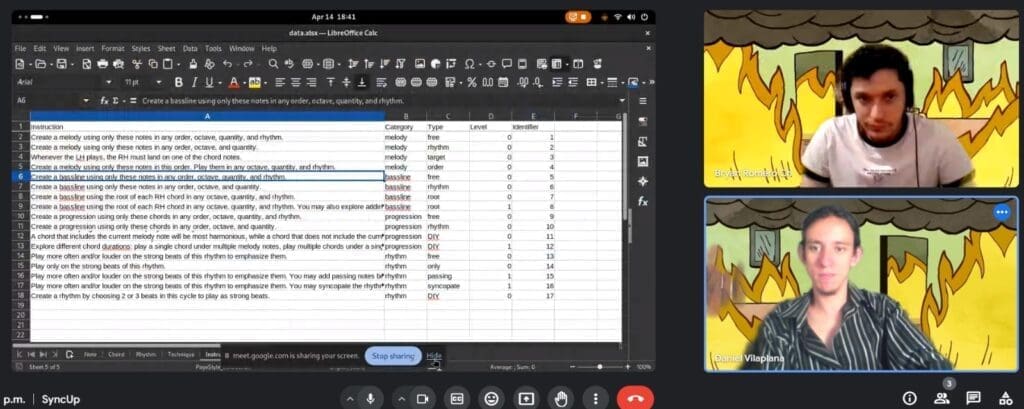
We started to do different brainstorming sessions (Individual,Team based and some including the members of the inner circle of the existing community) in order to map out the 8 core drives of motivation and behavior as proposed by the Octalysis Framework, the goal was to produce as many ideas for features that could be used for the UX, the Interaction Design, Game-like mechanics. the Marketing Messaging and the Brand Identity as a whole.

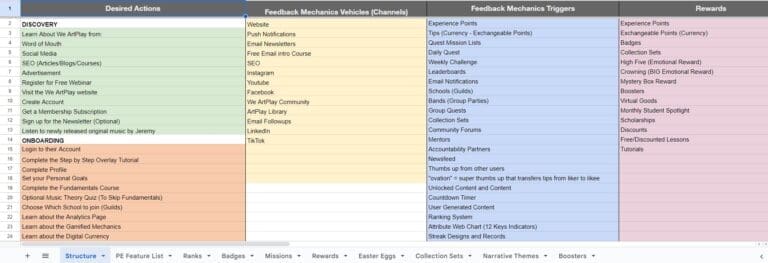
We mapped out different ideation stages for each of the Four Phases of the Experience:

– Discovery
– Onboarding
– Scaffolding
– Endgame

Wireframes and working Prototype (MVP)

The new website as it will be heavily gamified requires a lot of custom coded features:

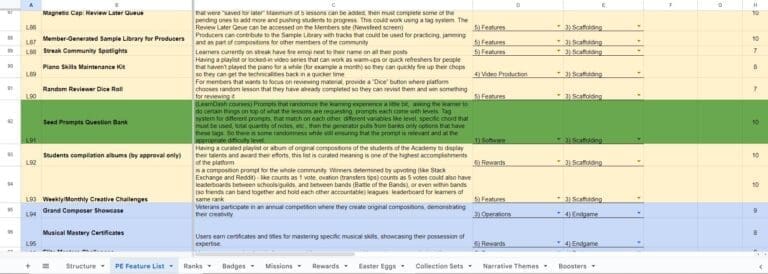
– Exercise Generator with prompts (Built a database that randomizes exercises based on the topics and level the student is currently working on)
– Exercise Inventory with Review for Later Queue (Students can collect exercises and save different sections for review)

We picked up a few of those but decided to build a MVP version first in order to collect feedback and insights and validate which features would be more valuable for the community.

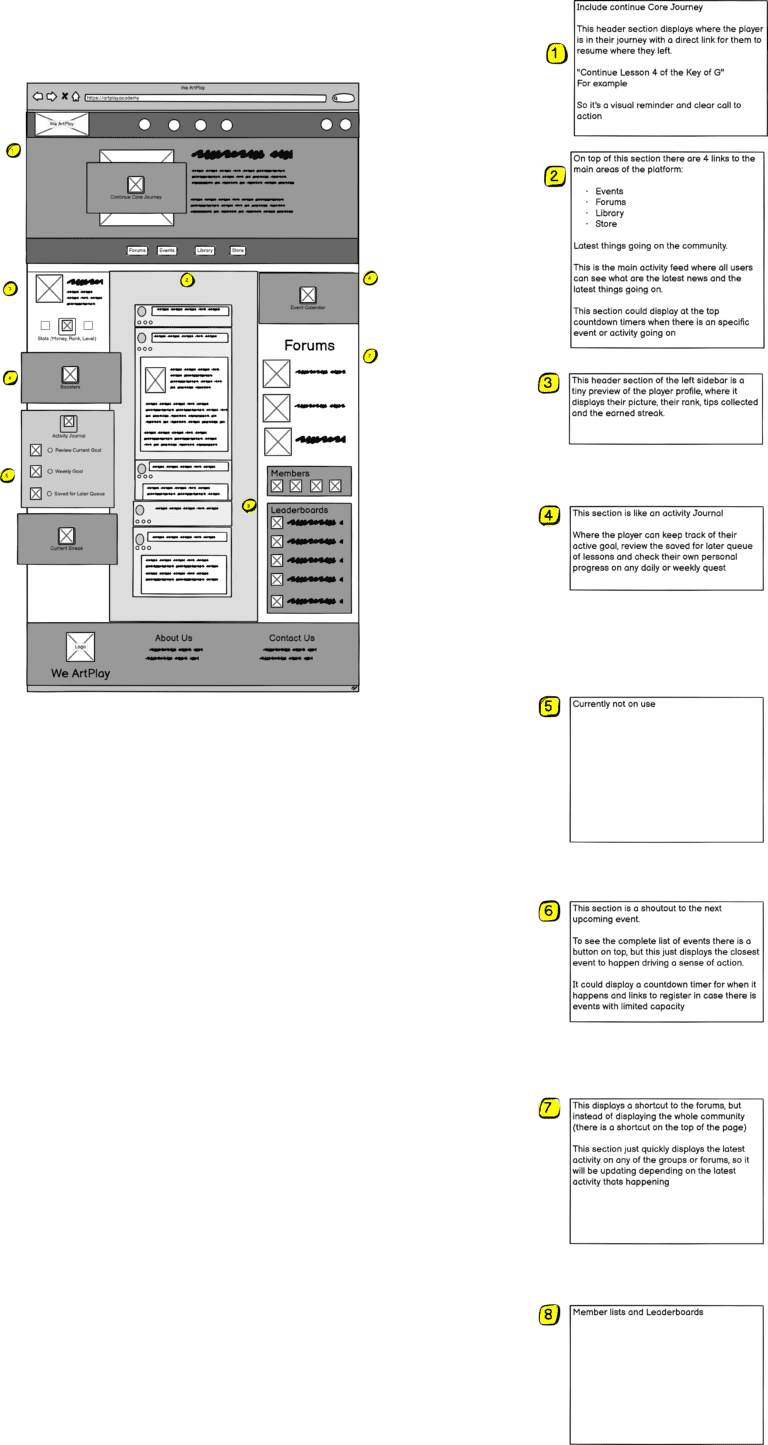
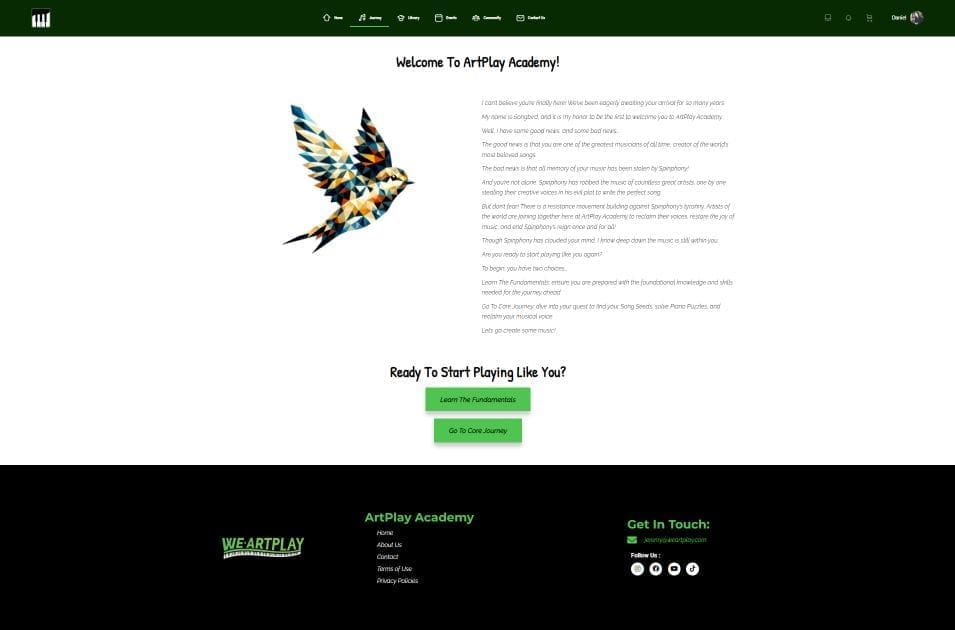
Home Page

v1 layout for the home page of the mvp

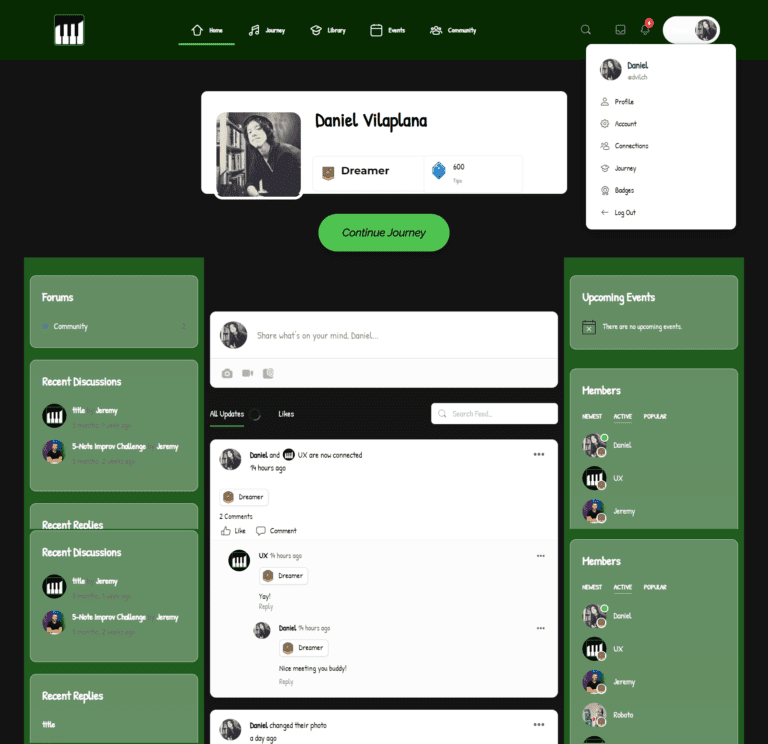
Members site

V1.1 layout of the member site of the mvp

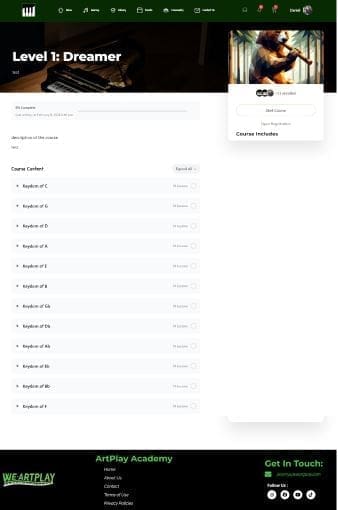
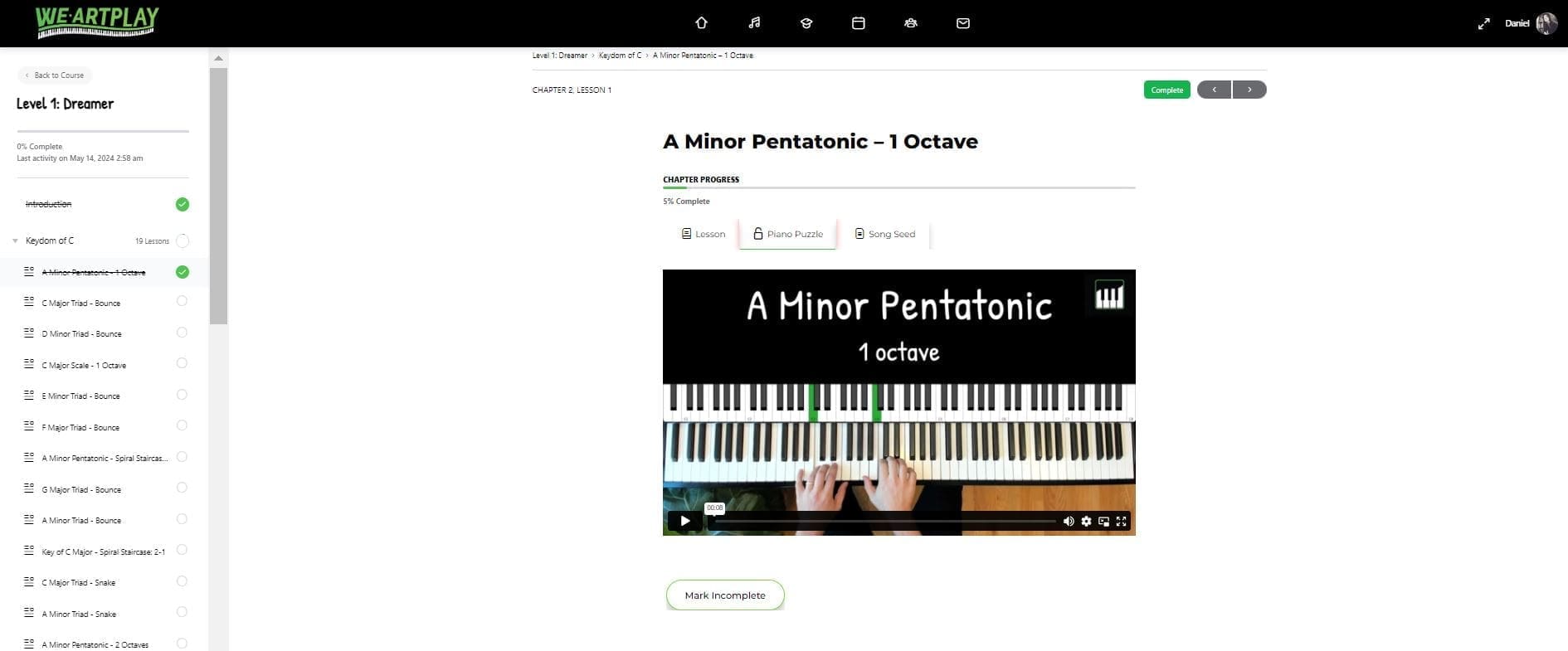
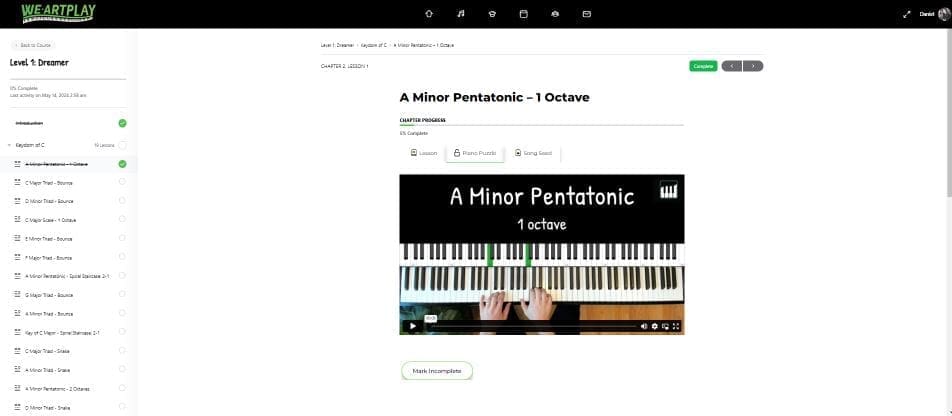
overview of the course structure
(CLICK to zoom)

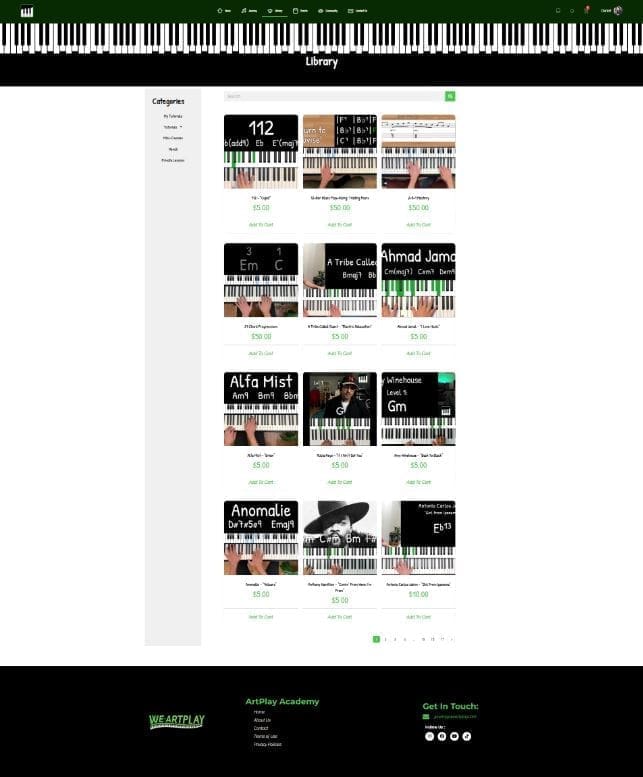
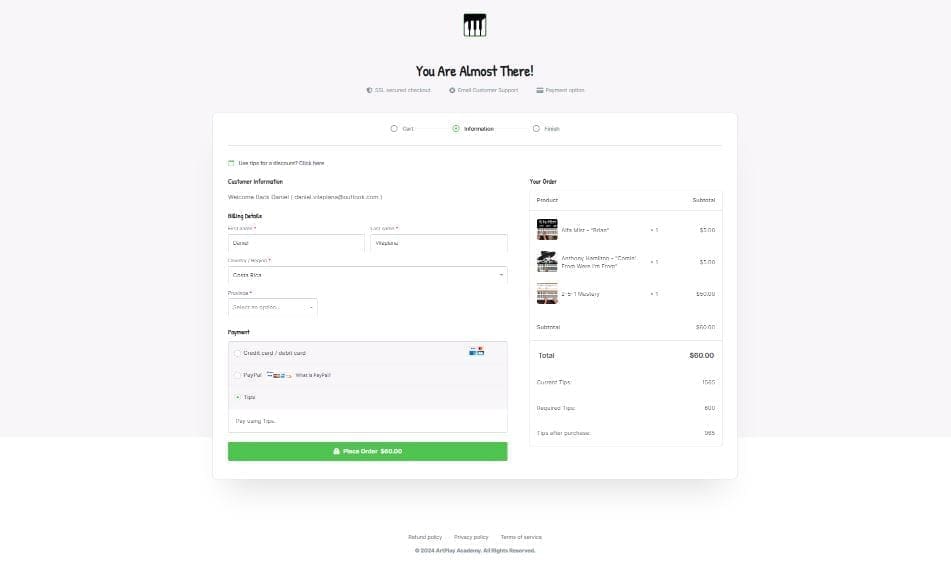
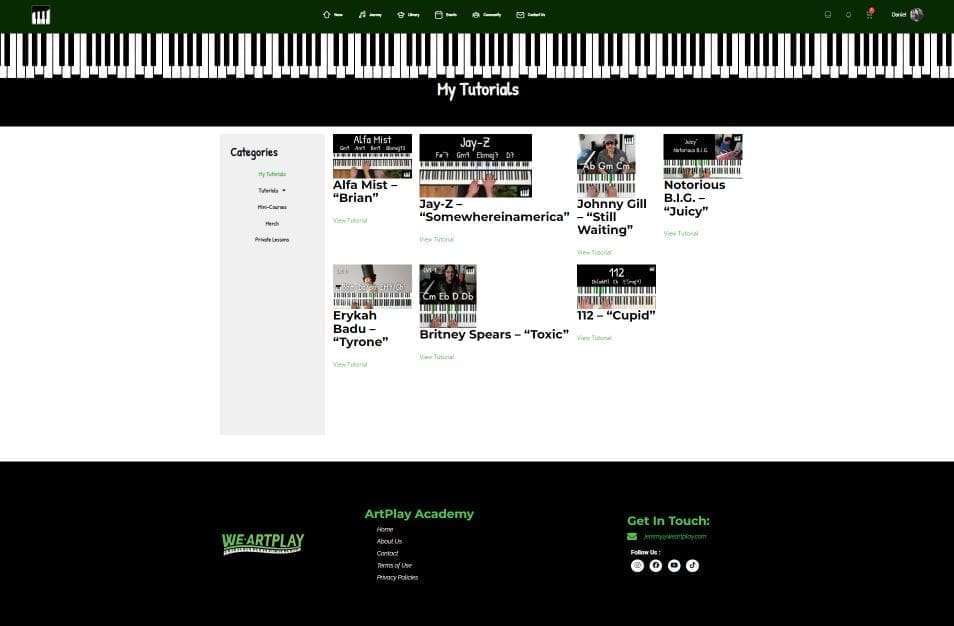
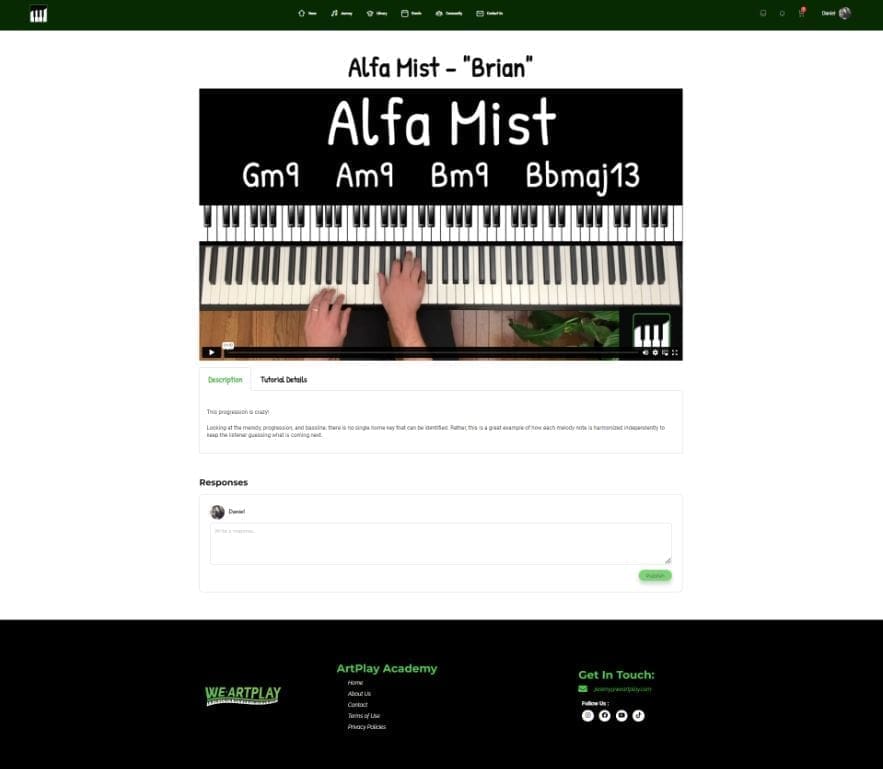
Overview of the Library, My Tutorials and checkout experience
(CLICK to zoom)

Identifying Core Motivation Problem:

One of the biggest blockages in student progression was finding the motivation/time to play.

Students reported sometimes they were already tired, without cognitive energy to engage in more learning and simply did not have a clear frictionless way to PLAY.

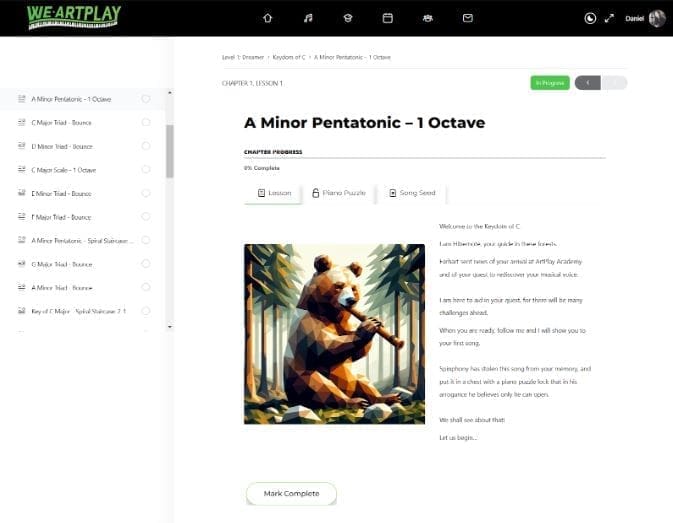
WIthin the narrative of the game at the end of each chapter the users found a chest that contained a new song.

But that song had to be a simple original creation of the student.

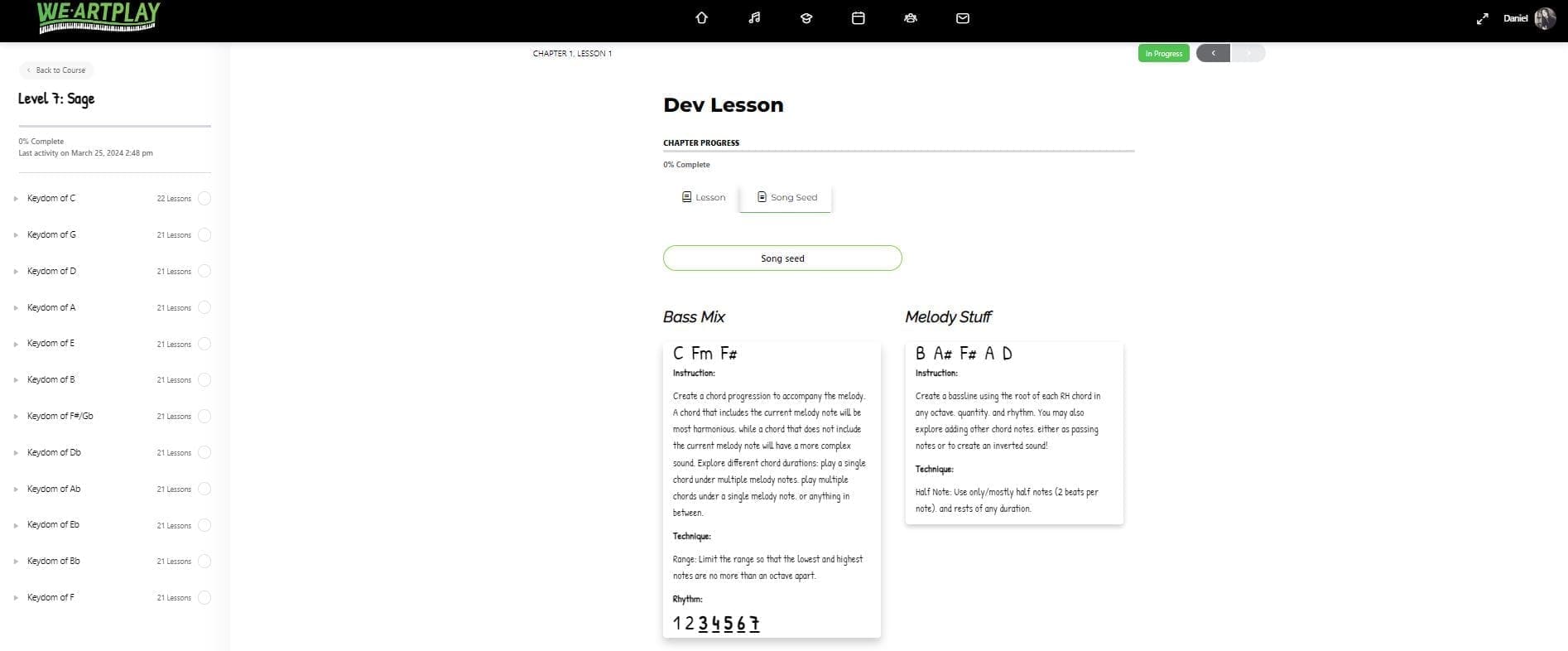
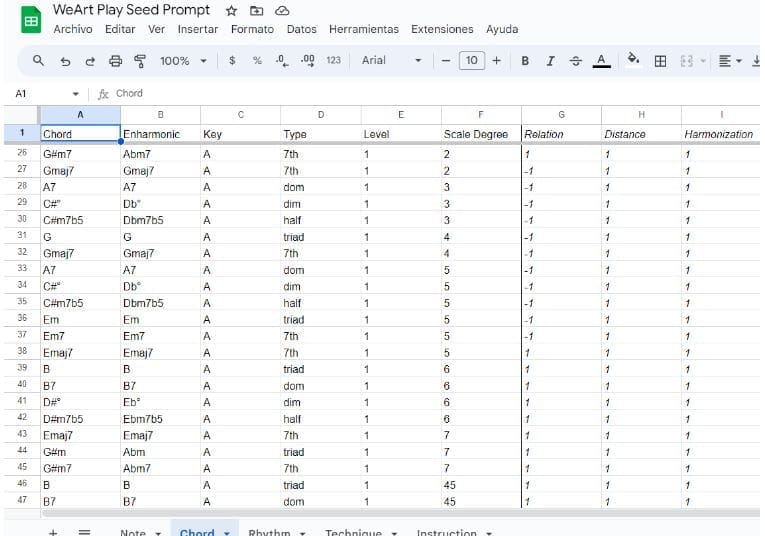
So we came up with a Song seed generator that provided a simple chord progression, some melody notes and a reflective prompt that adjusted to the level of the user.

This allowed users to play and improvise freely with the different suggestions provided to compose original music.

From all the features we shipped in the platform this was the most liked.

Users went from “I dont find time to play the piano” to “I know have a hard time getting off the piano once I start to play”

Which helps them with the habit creation of playing even if it is not content comsumption.

Custom made feature: EXERCISE GENERATOR WITH CUSTOM MADE WIZARD
(CLICK TO ZOOM)

Working the exercise generator

Turning a website into a videogame

Gamification on the Interaction Design

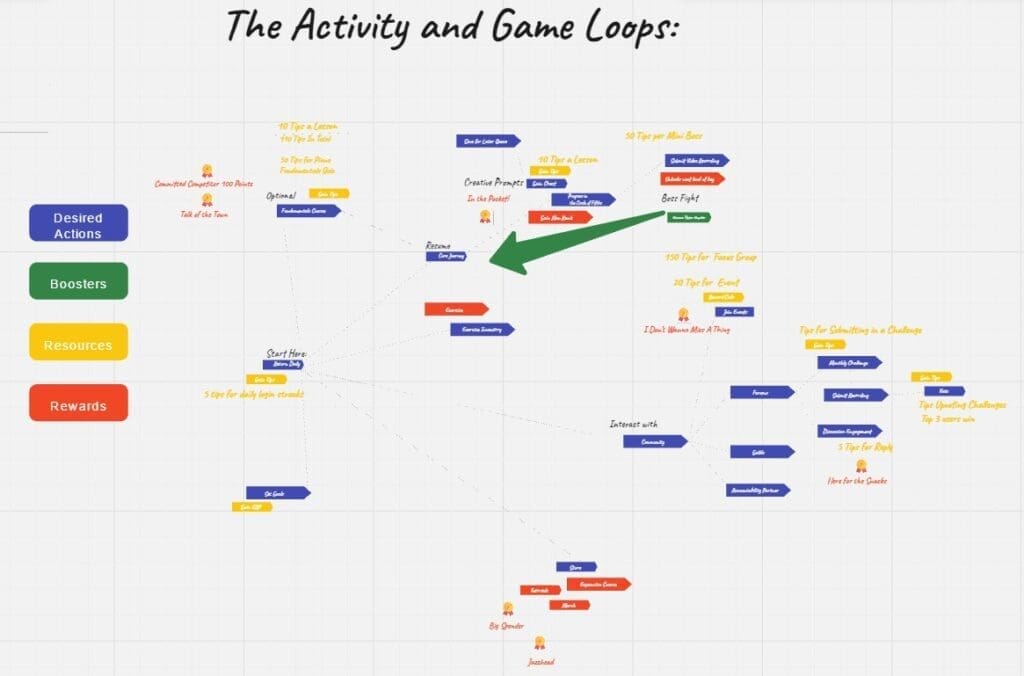
Once the layouts were in place we started to implement the Activity and Game Loops from the Phase I of the design and started to apply the game mechanics in place.

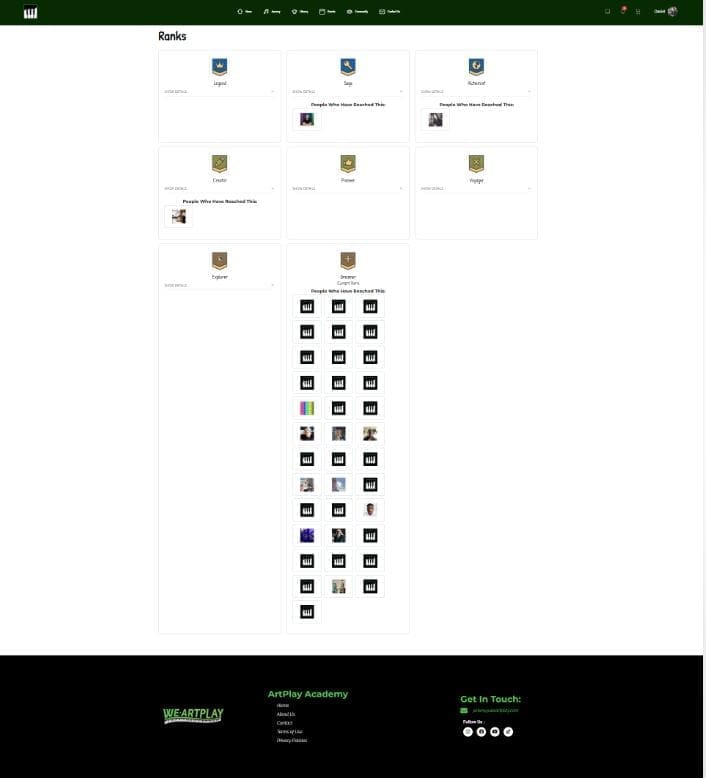
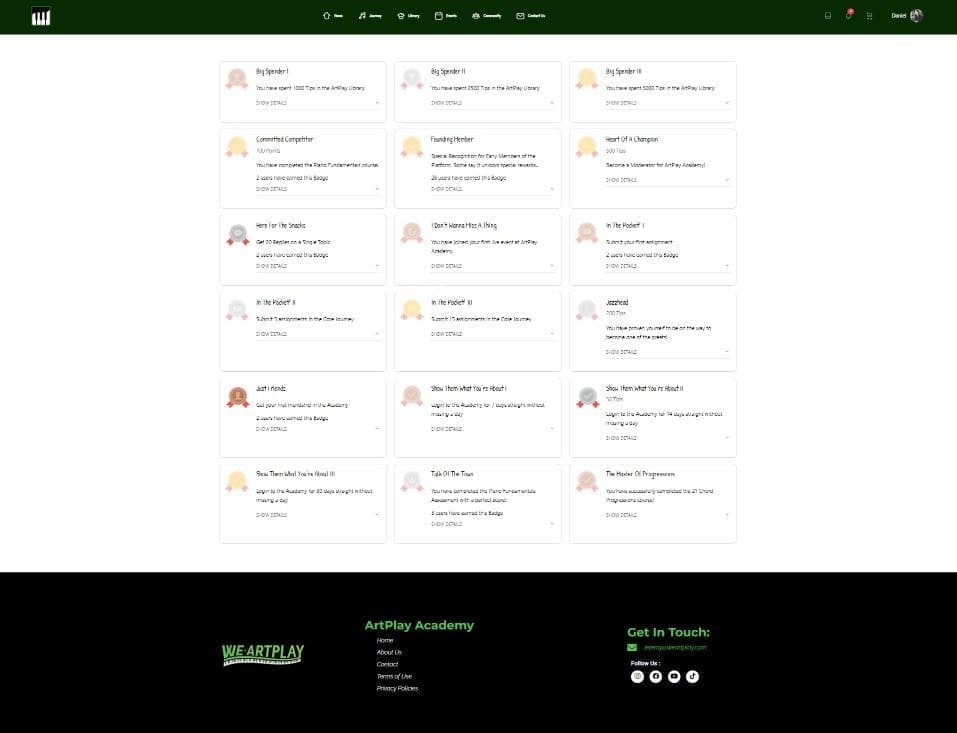
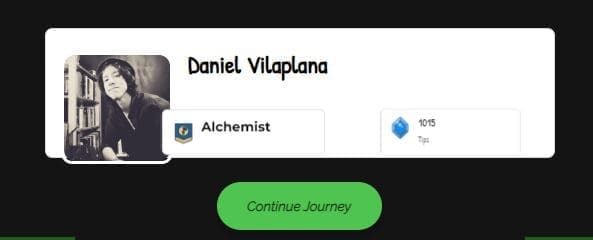
We created a rank system — a different rank for each of the 7 levels.

Each with animations, piano sound effects and notifications.

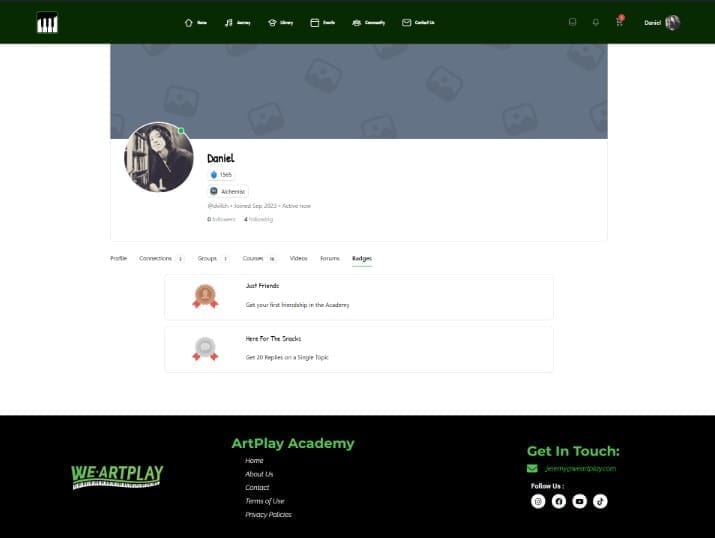
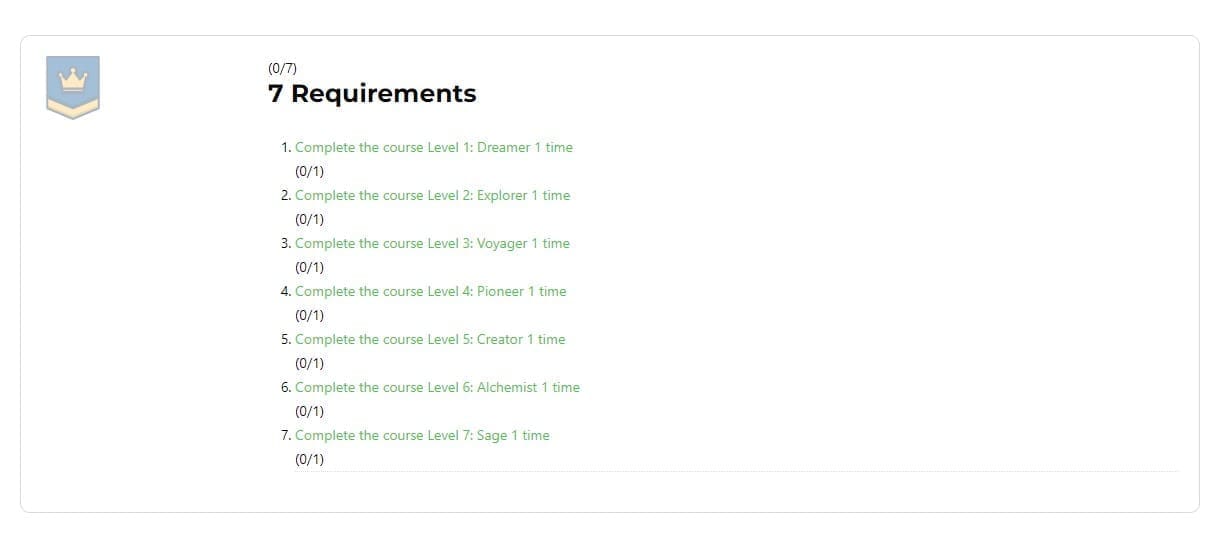
Then we started to connect the dots regarding the challenges, badge systems and point allocation for the virtual economy design.

Multiple testing was done until the whole automation worked correctly and the game was now ready for beta testing!

examples of Game Elements in the UI
(CLICK TO ZOOM)

Usability Testing

INSIGHTS FROM USER TESTING:

We broke down the beta testing program for the MVP Launch in three different phases.

Phase I: Inner Circle Community (45 users)

The most commited members of the old platform that have been students of the platform for quite some time, after a selection process we ended up pickin 30 users for the test period.

Phase II: Previous Students of past programs (500 users)

We picked up 30 users from this segmented list of users that were students at different times of programs of the old platform and we also invited the top 10 players form the first round so they could comment on their feedback impleementation.

Phase III: Rest of the Email List members (6000 users)

The last stage which is coming next is finally opening the doors to the rest of the community which includes newsletter subscribers, some users that have previously purchased something on the old site and others new members that recentl heard about the new site.

Next Steps:

The future of the project from MVP to Final Version…

The whole project has been a very enriching and challenging experience.

I have been working directly with the founder, crafting the concept of the game and storyline to a concrete an actionable UX Strategy all the way to the website development and testing phases with real users.
I started working by myself but eventually a developer and instructional designer jumped on board, there were many difficult parts of the process in which we felt completely stuck and had to be very resourceful and creative to resolve some of the technical challenges as the project is very ambitious on what it wants to achieve.

I have learned a lot about team work, leadership and Agile processes while improving my skills as a Gamification Designer, now we are about to onboard a UI specialist in order to elevate the visuals of the platform to finally launch Version 1 to the public which we will also assist with the Product Marketing.

I Will be updating the case study afterwards, overall I’m very satisfied and grateful for this big experience

Scroll to Top