The Crossroads Method

Building a blues platform that turns learning into a daily musical habit

Key Wins:

Validated paid demand across 6 countries with only $148.88 in ad spend

Generated $6,240 in gross sales across 3 validation tests before building the product

+ $1,000 unsolicited student donation

Designed and built a complete learning system solo in 90 days

Built a Practice Toolkit that turns content into a daily musical habit

After user behavior revealed the real practice friction

Building a Behavioral Learning System for Aspiring Musicians

The Crossroads Method helps aspiring musicians move from their first notes to confident improvisation through blues.

The broader philosophy is that learning music can become a vehicle for developing confidence, creativity, and personal growth.

What the Research Revealed:

  • LATAM demand was consistent and no product was serving it.
  • Learners weren’t defined by taste, but by what they wanted music to do for them.
  • Platforms measure what students watch. The practice sessions that actually drive progress go unmeasured.
  • Music education products rarely address why people want to play: to express themselves, process emotions, grow in confidence, or create change in their lives.

The Problem:

I needed to design the product, the learning system, the business model, and the validation strategy simultaneously, while operating with severe constraints.

Most education products are good at delivering content.

The harder problem is turning that content into continued behavior and eventual habit.

The product needed to connect the learning and practice into one behavioral system alongside community support while remaining viable enough to grow from a bootstrapped V1 into a larger product world.


My Role:

End-to-end product lifecycle

Owned the product from problem framing through launch, testing, and iteration.

Product Strategy & Systems Design

Turned research and domain expertise into a coherent behavioral system.

GTM & Product Evolution

Used experiments and user behavior to reduce uncertainty, validate demand, and evolve the product based on evidence.

Why the Blues?

The experience that made the opportunity visible

I fell in love with the blues because of its ability to turn difficult emotion into expression, resilience, and creativity.

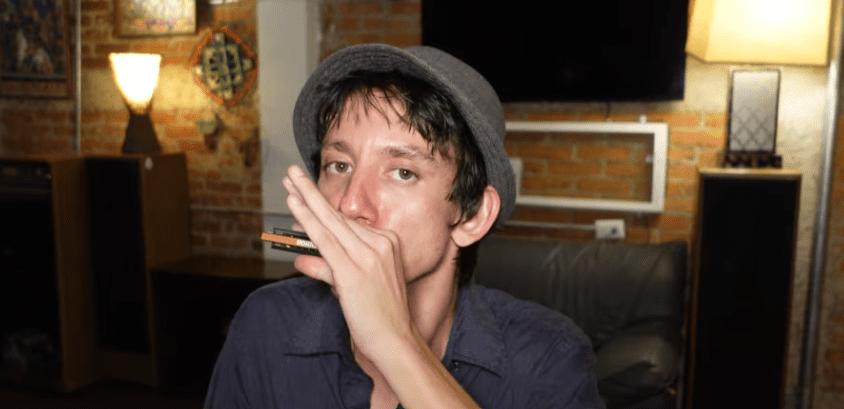
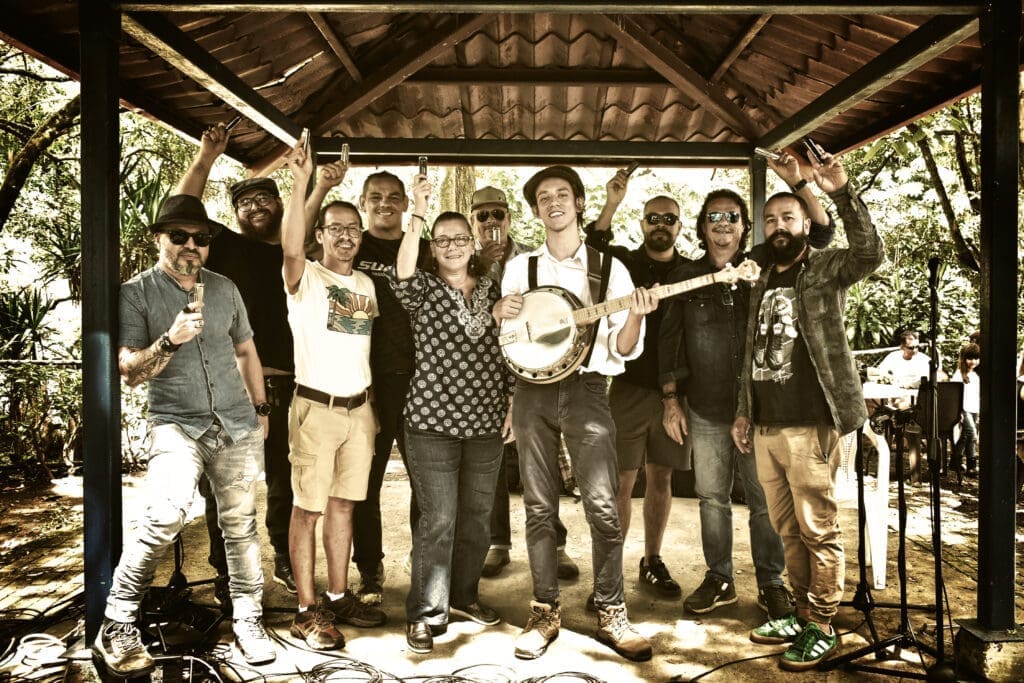
I taught myself harmonica after hours while working a call center job in Costa Rica, then started busking with friends for the fun of it. What started casually grew into years of performing, touring, and playing jazz and blues festivals across Central America.

The most important insight happened offstage. When we played in the streets, strangers would stop, listen, and tell us the music helped them through a difficult day.

I began to see the blues as a powerful vehicle for self-expression, emotional processing, and connection.

That experience became the product hypothesis:

What if learning the blues could give other people access to the same tools I had found inside the music?

Proving Demand before Building

I started with the cheapest version of the idea I could build, then progressively exposed it to real learners, paying customers, and a live audience. 

Each test answered a different question:

01. Method

Does the learning create results?

I built a paper prototype and tested it through live workshops to see whether the method could create confidence to keep learning.

02. Market

Will people pay for it?

I took the concept online and built an acquisition experiment. I wanted to learn whether strangers would move from curiosity to purchase.

03. Experience

Does the experience resonate?

I evolved the method into a more immersive group experience and tested it through a live workshop at a farmers market.

Test #1:
Testing the Method in the Real World

A Paper Prototype in a Real Classroom

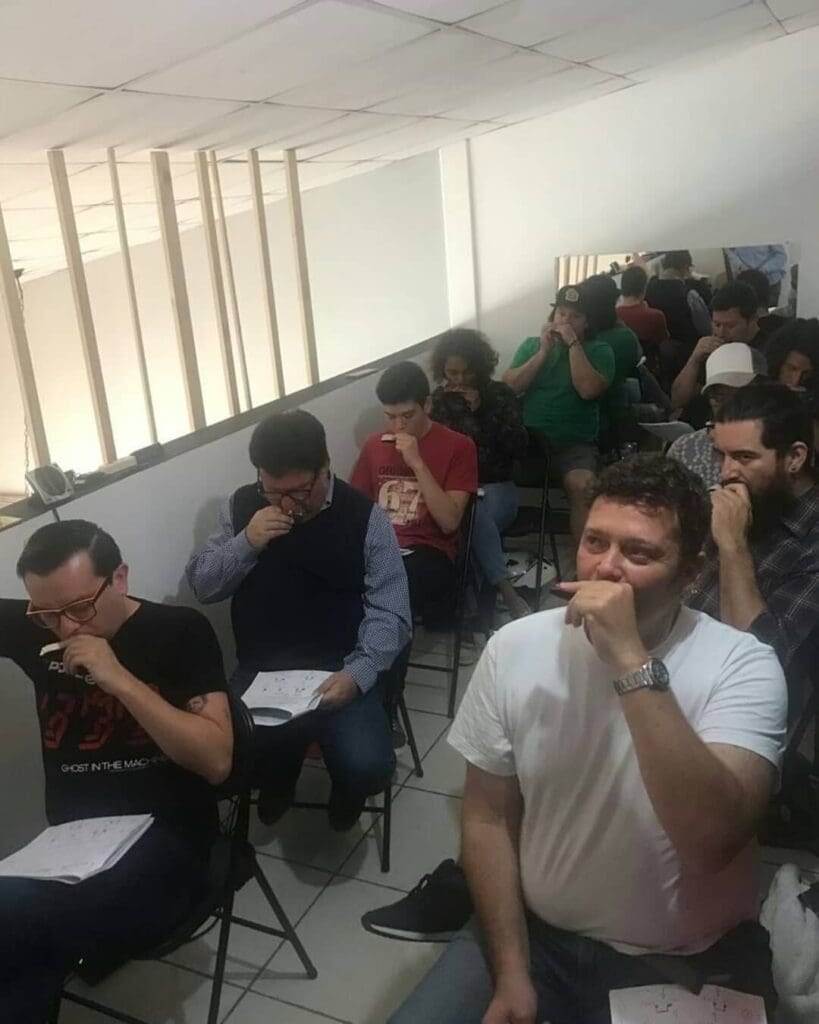
I believed blues could be taught through a low-barrier, learn-by-playing approach that let beginners make music from day one.

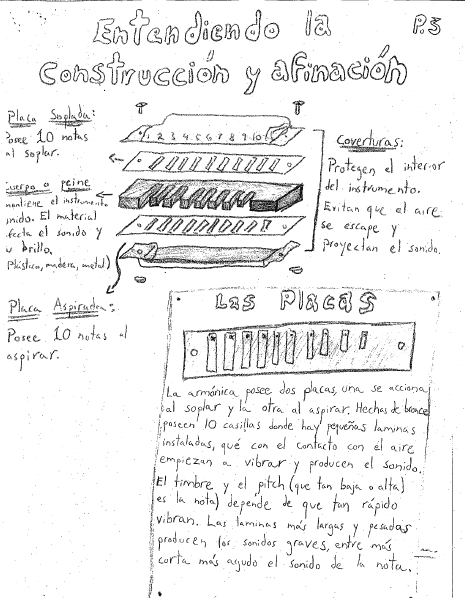
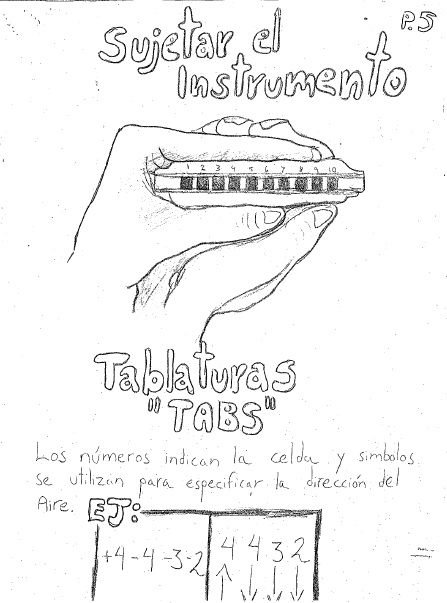
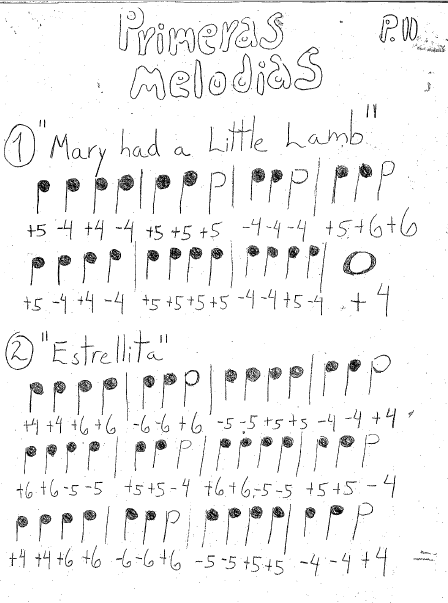
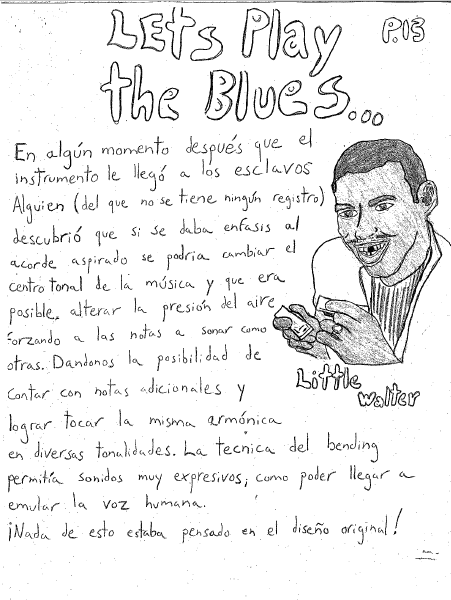
To test that assumption, I turned my teaching method into a 35-page paper prototype built around diagrams, call-and-response exercises, visual explanations, and some easy blues classics.

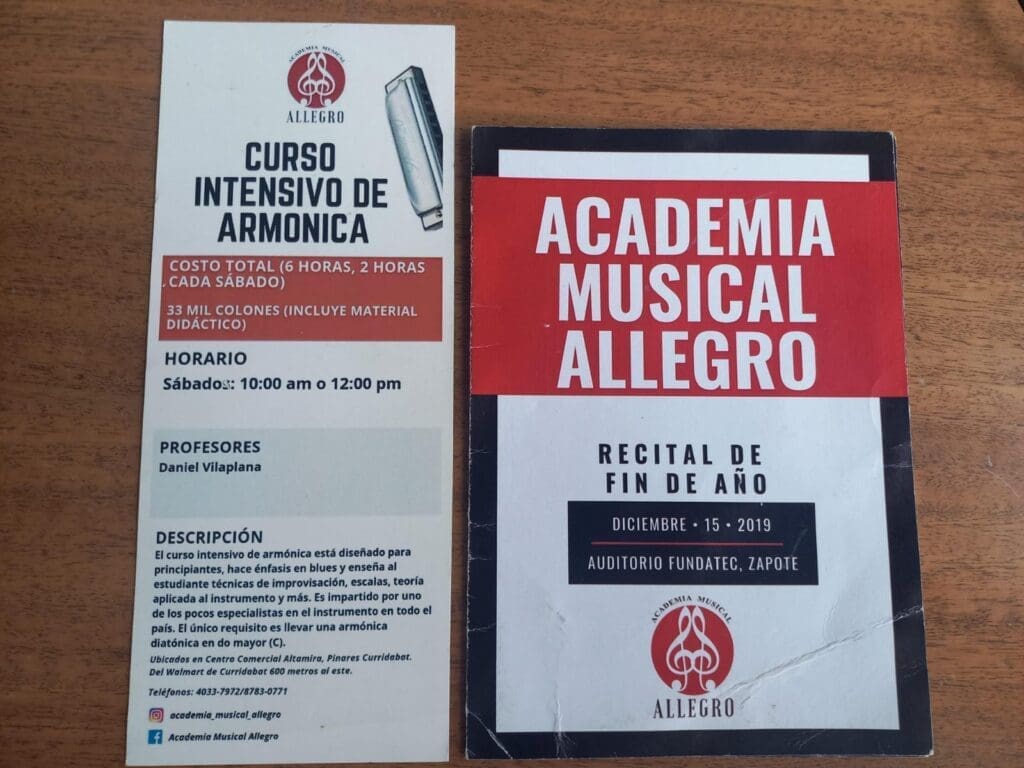
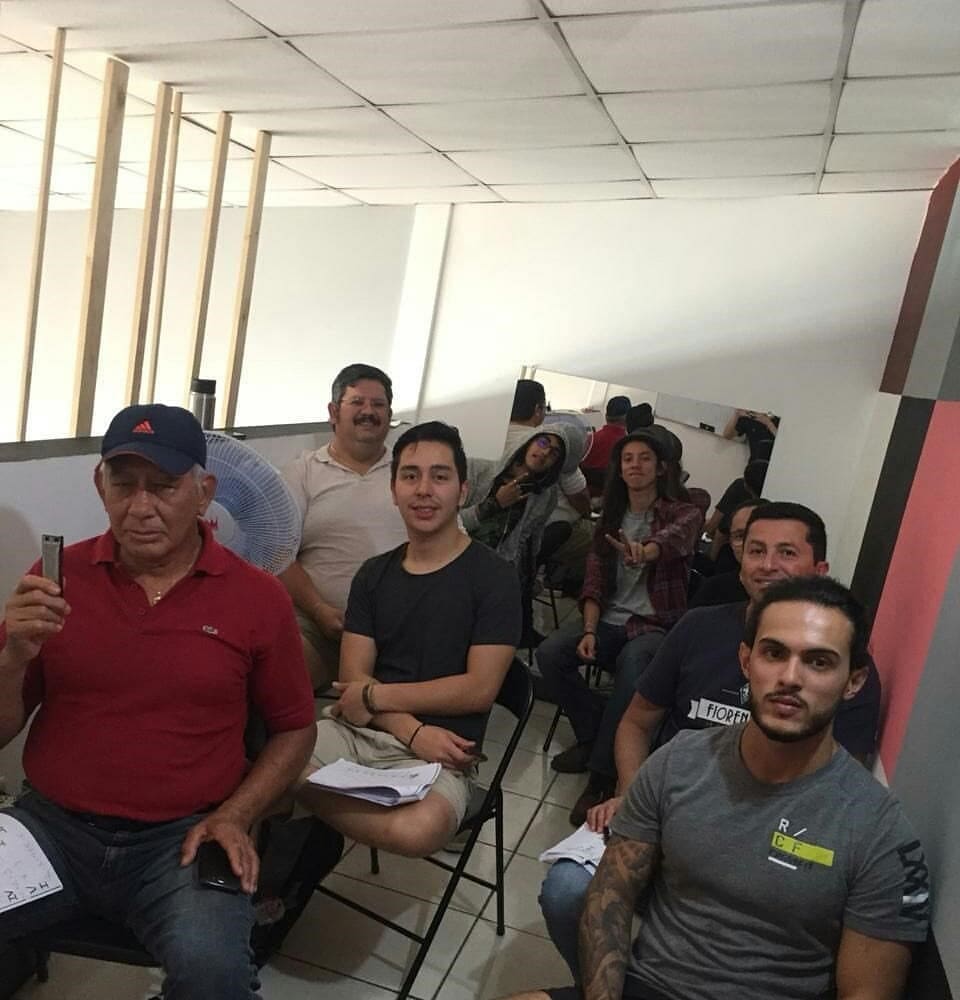
I then partnered with a local music school to run a series of live workshops, putting the method in front of real beginners and observing whether they could progress, stay engaged, and build enough confidence to keep learning.

First improvisations

After some time...

Method Validated

3 Sessions per workshop. $60 per person
6 hours total

  • 79 paid students in total across 10 workshops.
  • First 2 workshops sold out at capacity.
  • $4,740 in workshop revenue, split 50/50 with the partner school.
  • 60% of students completed all three sessions.
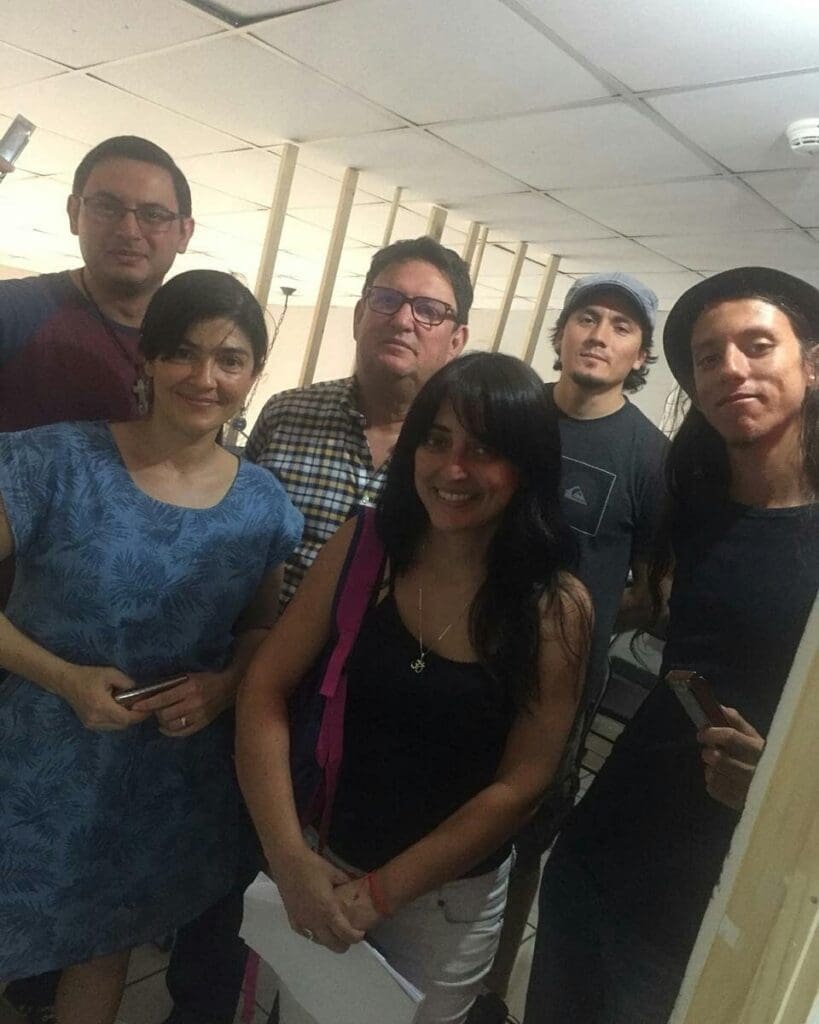
  • 15 graduates continued into five 3-person advanced study groups.
  • 3 students moved into private instruction at $95/month.

The workshop turned out to be an entry point rather than the whole product. Graduates asked for more, cohorts followed, and a few moved to private instruction at a higher price.

That sequence became the value ladder the Crossroads Method runs on to this day.

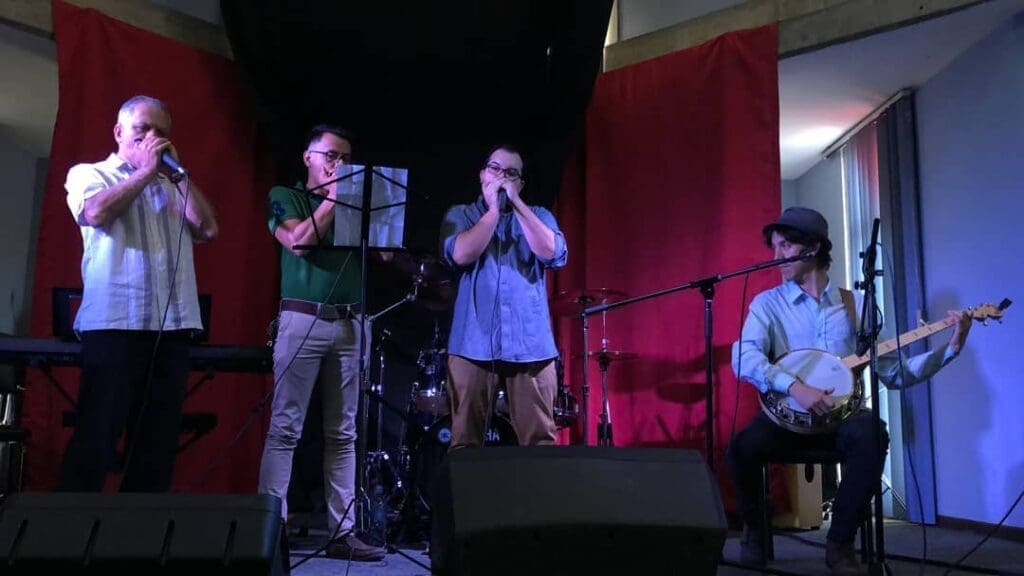
One advanced student group eventually performed live at a college auditorium.

Key Product Decision:

Going Digital

The method worked in a classroom, the question now was whether it could work at a distance.

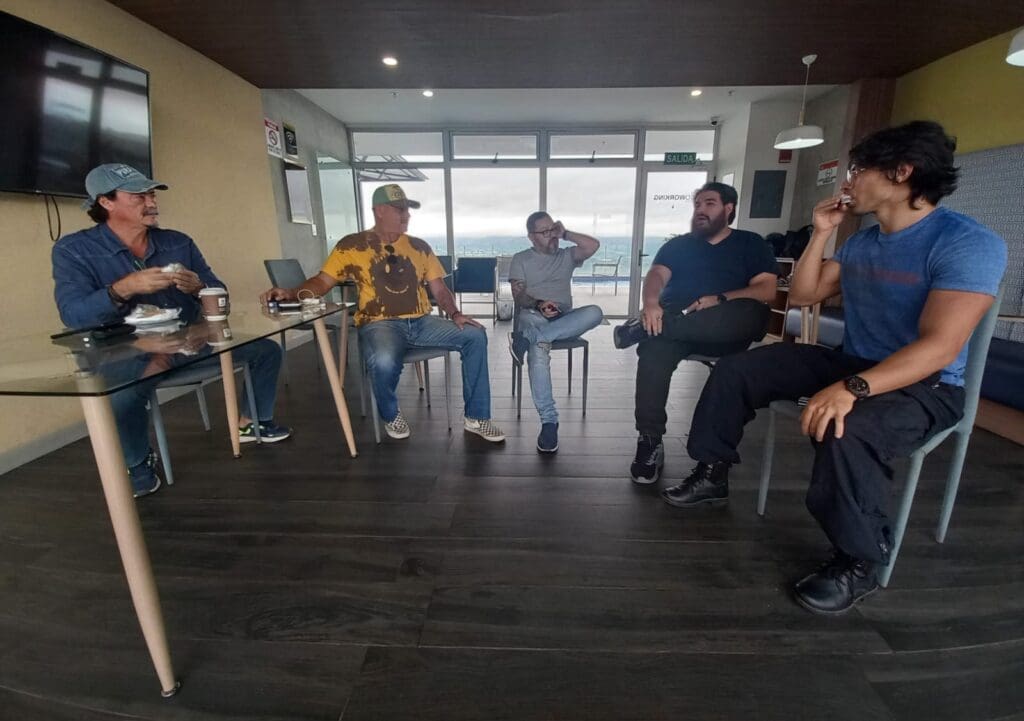
Rather than jump straight into software, I first worked with two creative collaborators to define an early visual identity and creative direction for what would become The Crossroads Method.

Their contribution helped turn the teaching method into a recognizable product concept, including the name that still defines it today.

With the concept taking shape, the next question was bigger:

Could this resonate beyond one classroom and attract paying learners across the broader LATAM market?

Test #2:
Validating Demand with $150

a 45 day market test designed to turn interest into measurable purchase intent

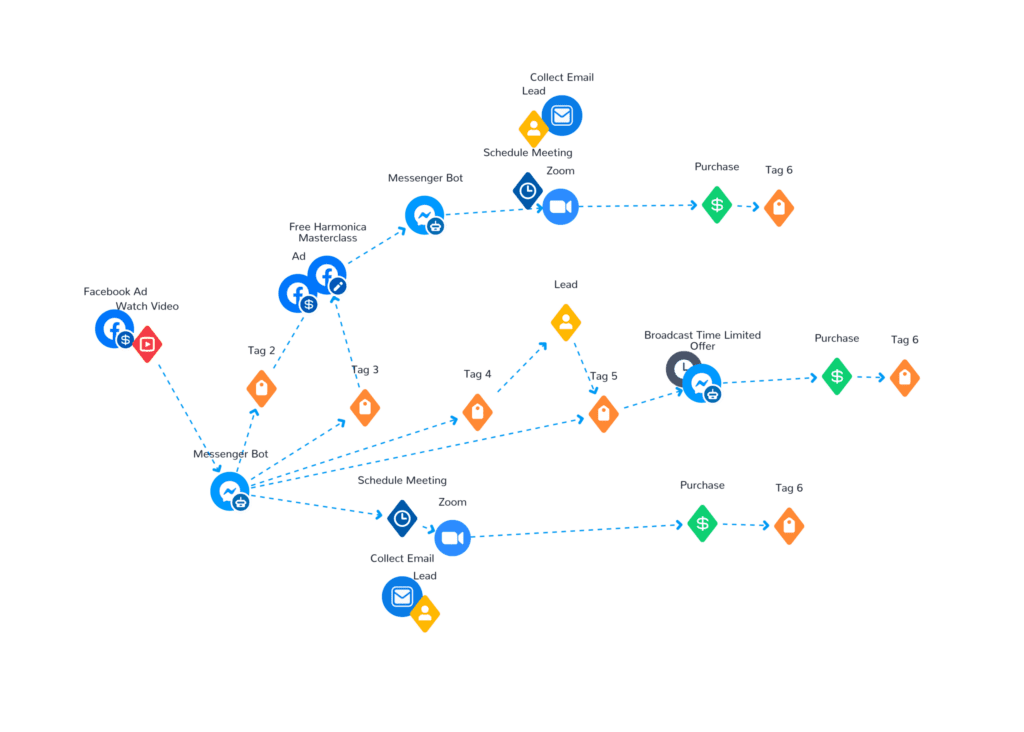
I designed the experiment around the smallest funnel that could produce a meaningful signal.

I collaborated with a filmmaker to produce an ad and a set of free lessons.

Then routed traffic into a chatbot that handled the information exchange automatically, tagging each interaction by interest and intent.

A retargeting campaign was done to route prospects to the free lessons.

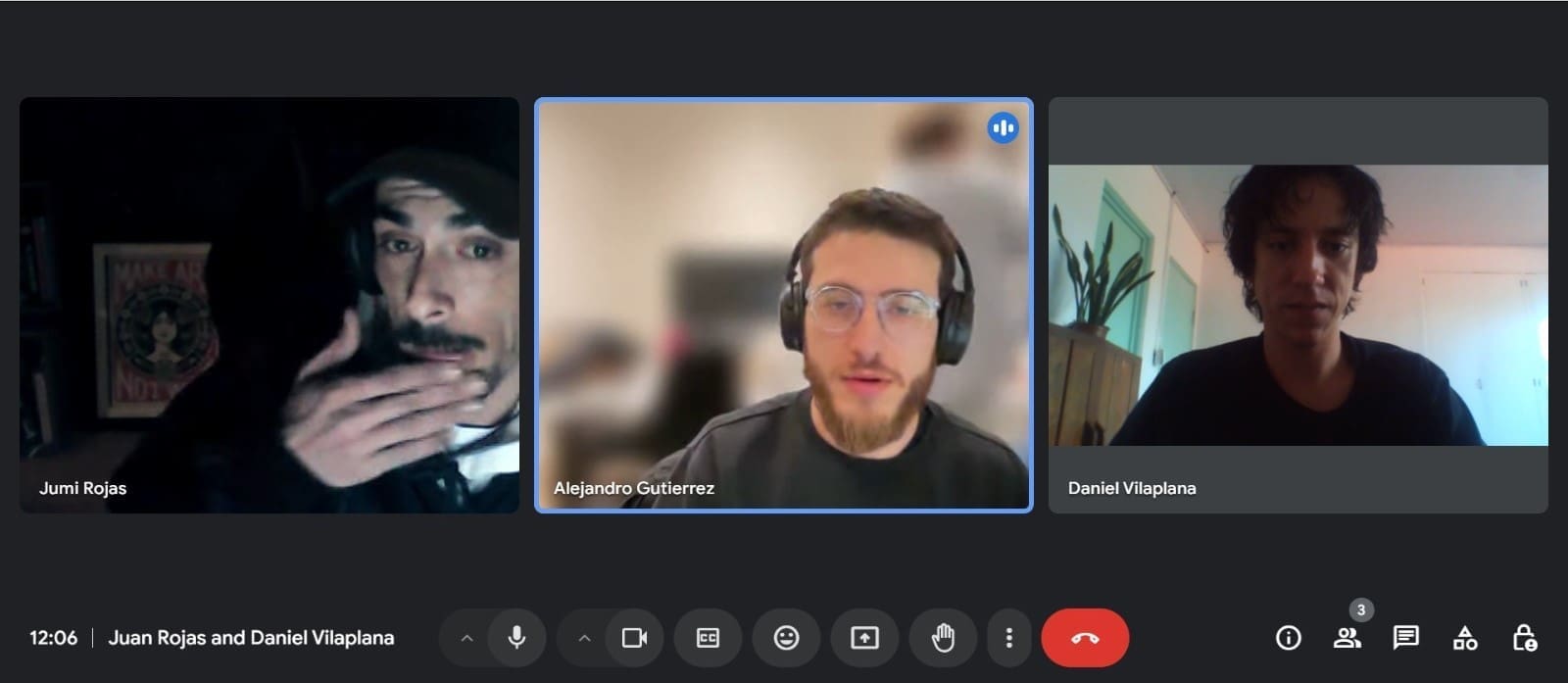
The funnel ended with a free one-hour class on Zoom, followed by an offer of the paid one-on-one program.

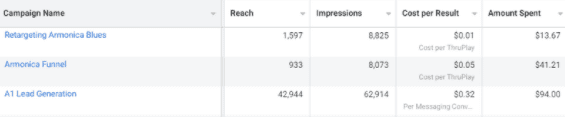
The entire experiment ran on $150.

If a small budget could not produce real interest and real purchases, the concept was not ready for a platform.

Spending more would only have bought a more expensive way to find that out.

Campaign spend across the 45-day test

Market Validated

45 day Market test
$148.88 in ad spent

  • 328 segmented leads entered through the chatbot funnel.
  • 35 prospects completed a free 1-hour live introductory class.
  • 8 converted into the 2-month paid program at $60 per month
    (22.9% conversion rate).
  • $960 in program revenue generated directly from the test.
  • Paid learners across 6 countries: Costa Rica, El Salvador, Chile, Peru, Ecuador, and Mexico.

Every participant experienced a meaningful musical win within the introductory class.

That session became the real product discovery: I transformed it from a one-on-one lesson into the reusable masterclass that still serves as the product’s entry point today.

One learner in Mexico City later supported the project with an unsolicited $1,000 donation. We eventually met in person.

Test #3:
Bringing the Experience to Life

Could learning, community, and live performance work as one system?

The workshop sold out in less than 48 hours, before the farmers market had any chance to promote it.

This test was about the experience itself. I partnered with a local farmers market to run a three-week live program that included community, small-group collaboration, and public performance.

The goal was to see whether these elements could work together as one coherent learning system.

Before the first session, 9 students joined a WhatsApp group for onboarding, short intro lessons, questions, and feedback, so they arrived already knowing the fundamentals.

During each Saturday session, I demonstrated the musical concept onstage, the full group practiced it together, and then students worked in three-person teams on stage.

Each team rotated through three musical roles (rhythm, fills, and lead) so every learner experienced each role over the three-week program.

The sessions ended with students applying what they had learned to a real blues song in front of the farmers market audience.

Playing real music from day one stopped being a teaching principle and became literal. 

Experience Validated

3-WEEK LIVE PROGRAM
$60 PER PERSON

  • 9 students participated, organized into three 3-person teams.
  • 5 returning students from the earlier workshops and the online test.
  • Sold out in under 48 hours from a single Instagram story, with zero ad spend.
  • Mixed skill levels progressed inside the same shared experience.
  • Students rotated through rhythm, fills, and lead across the three weeks.
  • Each session ended with a  live performance for the farmers-market audience.
  • The event produced reusable community  assets for marketing purposes.

This was the first time Crossroads behaved more than a class.
Learning, community, progression, collaboration, and performance worked as one experience.

Small teams made mixed skill levels work without fragmenting the journey.

That shifted the product from a sequence of lessons toward a connected world.

What The Tests Proved and the Decisions They Shaped:

01. Method

Does the learning create results?​

Learning:
A low-barrier, learn-by-playing method could get beginners creating music quickly enough to build confidence to continue into deeper instruction.

Decision:
Keep the learn-by-playing method at the core and use the workshop as the entry point to a broader value ladder.

02. Market

Will people pay for it?

Learning:
The concept could move people from initial curiosity through an acquisition funnel into paid learning.

Decision:
Build the digital product, and convert the live intro class into a masterclass format that became the permanent discovery point.

03. Experience

Does the experience resonate?

Learning:
Community, progression, collaboration, and live performance could work together as one coherent experience across mixed skill levels.

Decision:
Move past isolated lessons and start designing Crossroads as a connected product world.

I wanted to know if the method worked and the tests ended up handing me a monetization model

What was Left to Answer:

Every yes depended on me being in the room. Each test proved demand for an instructor.

The platform had to prove a digital product with a supportive community could achieve the same results without founder dependency.

Who are we Building for?

Identified Recurrent Patterns from UX Research

My Original Assumption:

I believed I was building for music fans and blues enthusiasts that wanted to develop skill and mastery like the great bluesmen of the past...

What Research Revealed:

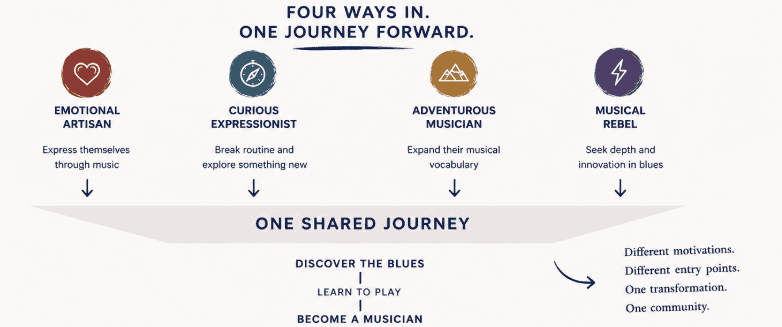
People were not united by the music they liked.
They were united by what they believed music could do for them.

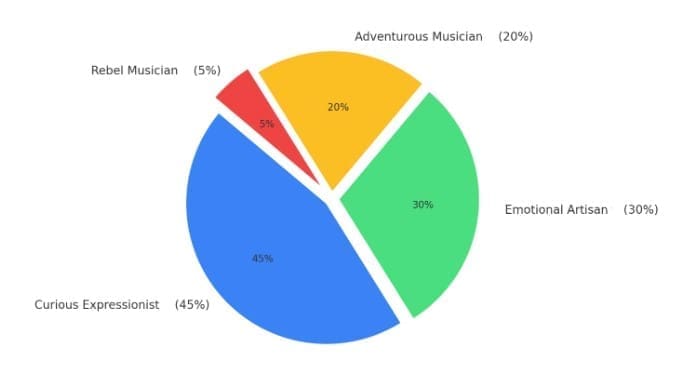
  • Just 5% of people came in because they were blues fans originally and wanted to learn specifically how to play blues just as the old masters.

  • 45% of people interested in learning to play the harmonica were 50+ years old. They never pursued anything artistic, and now that they had time, they wanted to break away from routine and explore new things.

  • 30% were young people drawn by the emotional aspect of the music and wanted mediums of self-expression and self-discovery.

  • 20% of people were already active musicians, didn’t know anything about blues, but knew it was a great way to expand their skills.

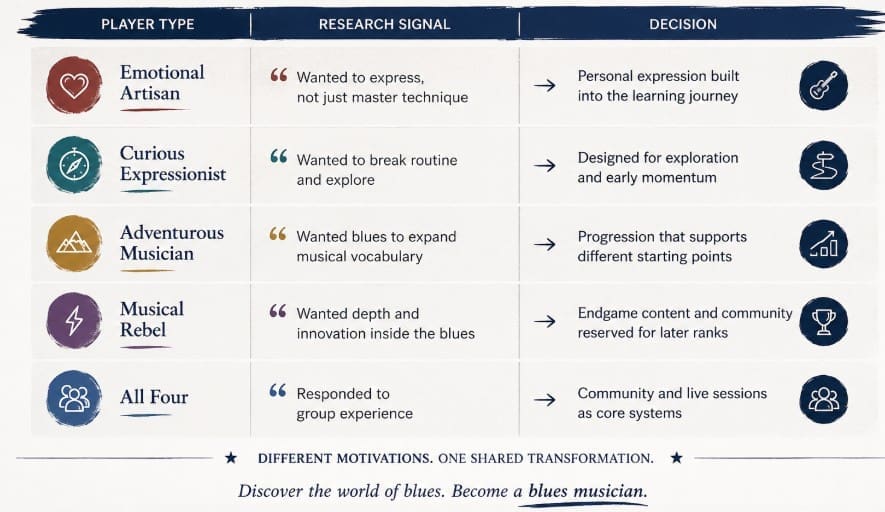
The player types are grouped by outcomes, behavior, and motivations, rather than musical taste or demographics.

I set out to build for blues fans, but they were 5% of the actual audience.

The other 95% came for expression, exploration, connection, and growth.

Each group has their own motivations and desired outcomes, and the blues was the vehicle to reach them.

Everything after this point is how I built one experience that could hold all of them without falling apart.

From User Insights to Product Strategy

A 90 DAY PLAN TO TURN STRATEGY INTO A WORKING PRODUCT

The research had changed who I was building for and clarified the shared journey the product needed to support.

The next challenge was execution: translate those insights into a coherent V1 without trying to build the entire vision at once.

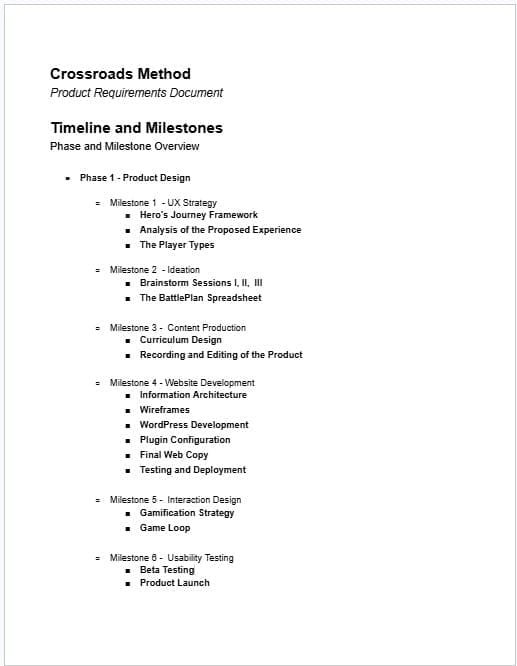
I created a Product Requirements Document to define the scope, dependencies, priorities, and sequence of the build.

The constraint was 90 days.

The work was organized into six milestones.

That forced every milestone to answer a specific product question, keep scope under control, and move the project into a functioning first version.

Milestone #1:
UX Strategy

What should this product become?

Purpose
(Why)

• Use music as a vehicle for personal growth.
• Build a creative discipline that influences other areas of life.
• Promote Emotional Resolution skills and a resilient mindset

Process
(How)

• Progression mechanics inspired by games.
• Learn by Playing from day one.
• Self-paced learning with live community
• Reinforce practice with challenges, feedback, and meaningful rewards.

Outcome
(What)

• Immersive digital world for experiencing blues.
• A Spanish-language home for blues education.
• An ecosystem connecting LATAM community.
• A platform designed to expand as new user needs and behaviors emerge.

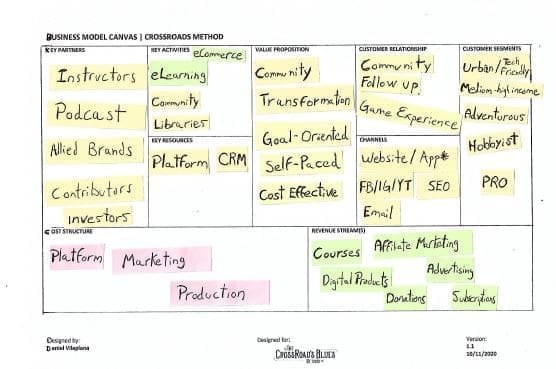
Business Model Canvas

The Product Experience Blueprint

What systems make the experience possible?

The Product Experience Map

What does the system feel like to the user?

The North Star

What the system can become.

The complete Crossroads world where learning, community, progression, marketplace, and future extensions operate as one connected experience.

Version I

What must exist now.

The smallest coherent system capable of delivering the core journey, supporting progression, connecting learners, and generating real usage to learn from.

Now that the North Star was clear, the next challenge was deciding what belonged in V1.

Milestone #2:
Ideation

How 216 ideas turned into 20 product features

With the North Star defined, It was time to measure how the strategy could translate into the actual product experience.

I explored opportunities across the entire learner journey: from first discovery through long-term progression, using research insights as the starting point.

The Brainstorming ended with 216 ideas for the entire product experience. I evaluated the ideas against user impact, strategic fit, implementation effort and their importance to the core Crossroads experience in order to prioritize what to select for V1.

V1 took the 20 highest-impact features that could ship inside 90 days. Everything else was moved to a backlog.

The goal was to identify the smallest coherent version of the system capable of delivering the intended experience and leave room for the product to evolve.

Milestone #3:
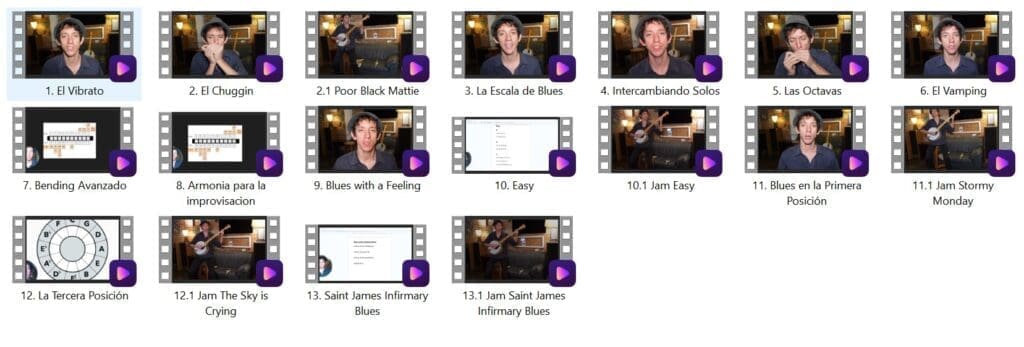
Content Production

How did the product strategy become a structured experience?

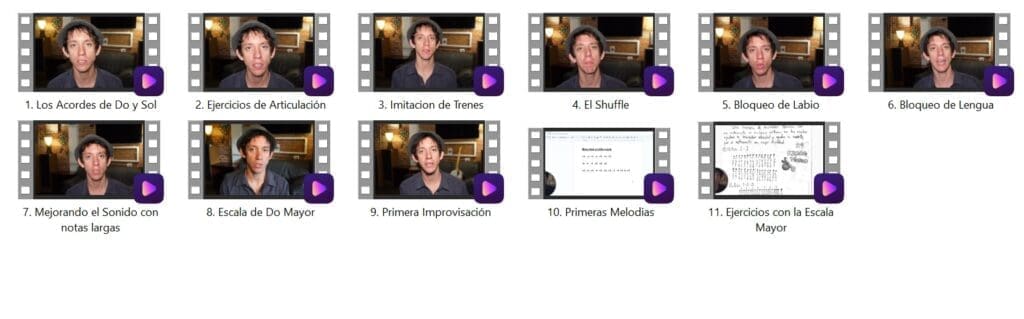
module I:
Foundations

module II:
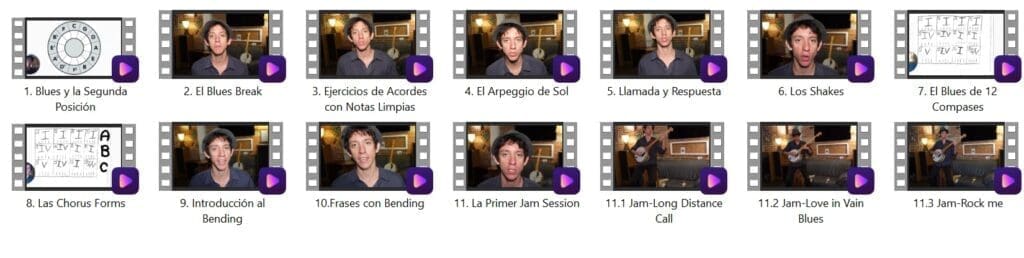
Language of blues

module III:
Musical Expression

More than having the right to experience sadness...
We have the right to free ourselves from it by transforming all its raw energy into beautiful and useful things

The course had to take someone who had never held a harmonica and get them improvising over a blues.

Module I builds the physical foundation, breathing, rhythm, and single notes, the mechanics that have to become automatic to allow music to happen.

Module II moves into the language of blues, bending, and phrasing, where technique starts turning into expression.

Module III is repertoire and improvisation, where students start to unlock their musical voice.

I borrowed equipment, recorded all 35 lessons in three days in a garage-bar a friend let me use, and taught myself Adobe Premiere to edit the whole thing over a weekend.

The curriculum was ready. Now the product needed an interface, structure, and platform capable of delivering it.

Milestone #4:
Website Development

How do we make that experience a real usable product?

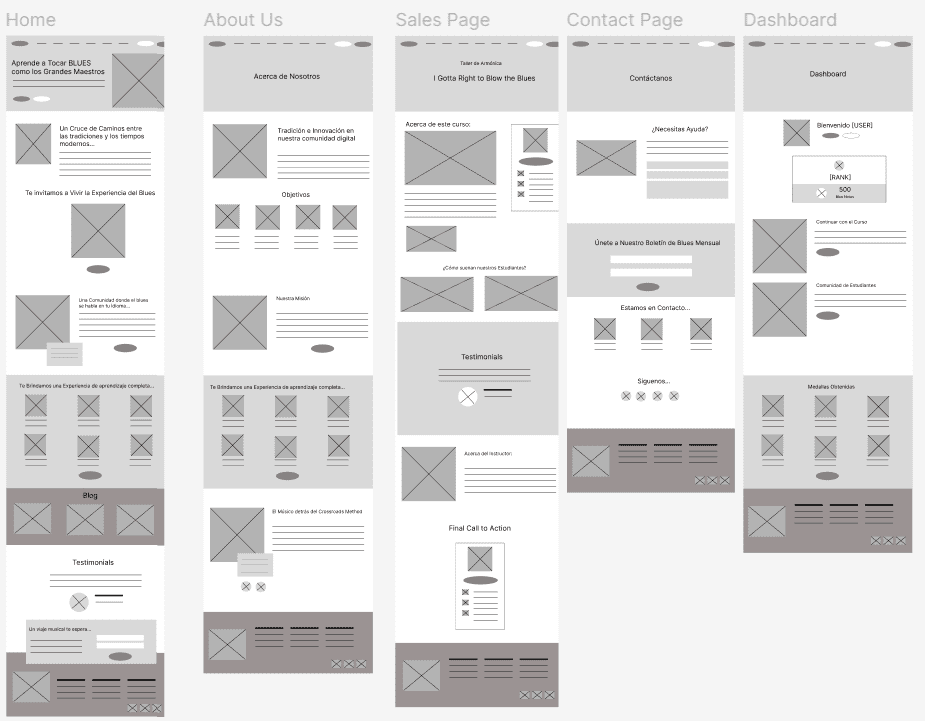
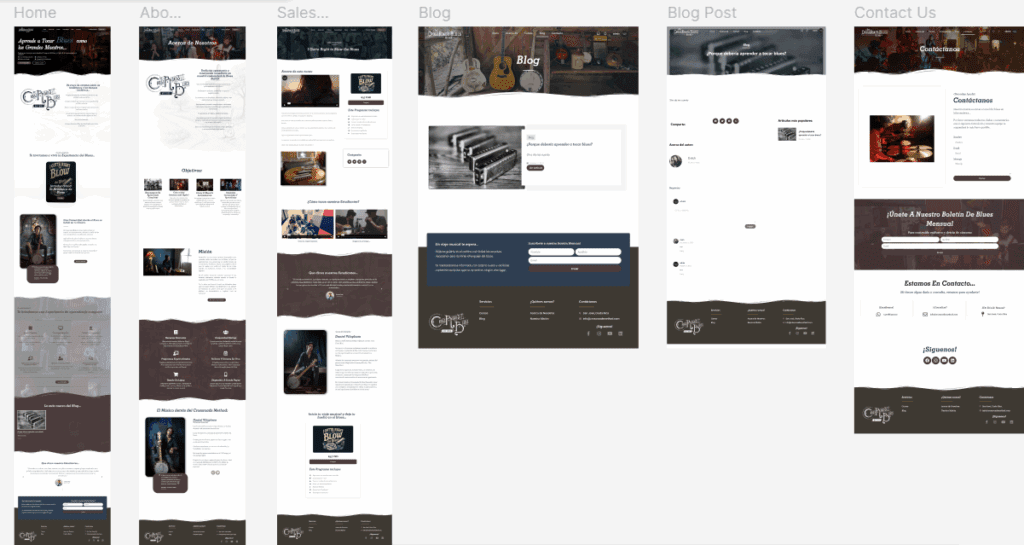
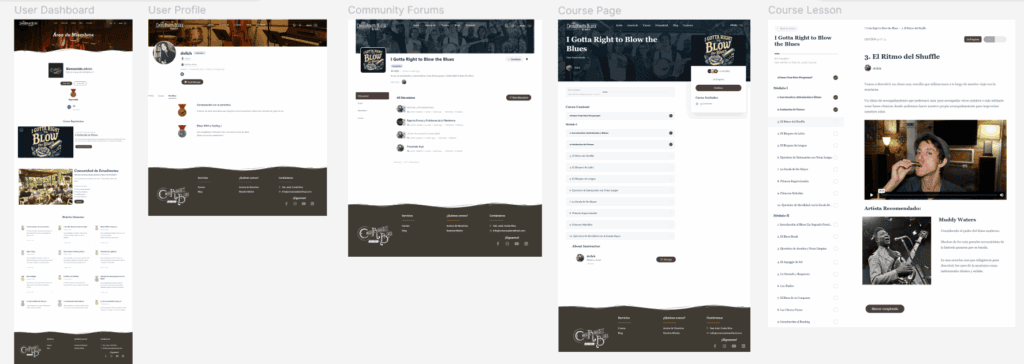
Designing every screen before building meant the wireframes became the spec, so nothing got built twice.

I mapped the core experience in Figma wireframes before introducing visual design.

The platform had to be something I could own.

Hiring developers for every small change was never on the table while bootstrapping, considering a product this early needs to change constantly.

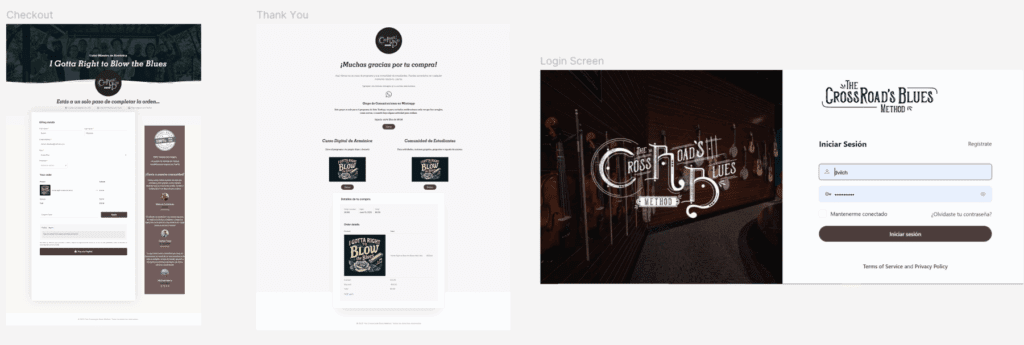
So I built on WordPress with LearnDash as the LMS, BuddyBoss for community and GamiPress for the ranks and points economy.

It gave me a system I could reshape myself, at the speed the product needed, with room to grow as my own skills grew alongside it.

WordPress turned out to be far more capable than its reputation suggests, allowing custom code where it mattered, proven infrastructure where it did not, and full control over both.

The platform could now deliver the experience. The next challenge was designing how students would move, progress and stay engaged inside it.

Milestone #5:
Interaction Design

How does the product reinforce behavior and progression?

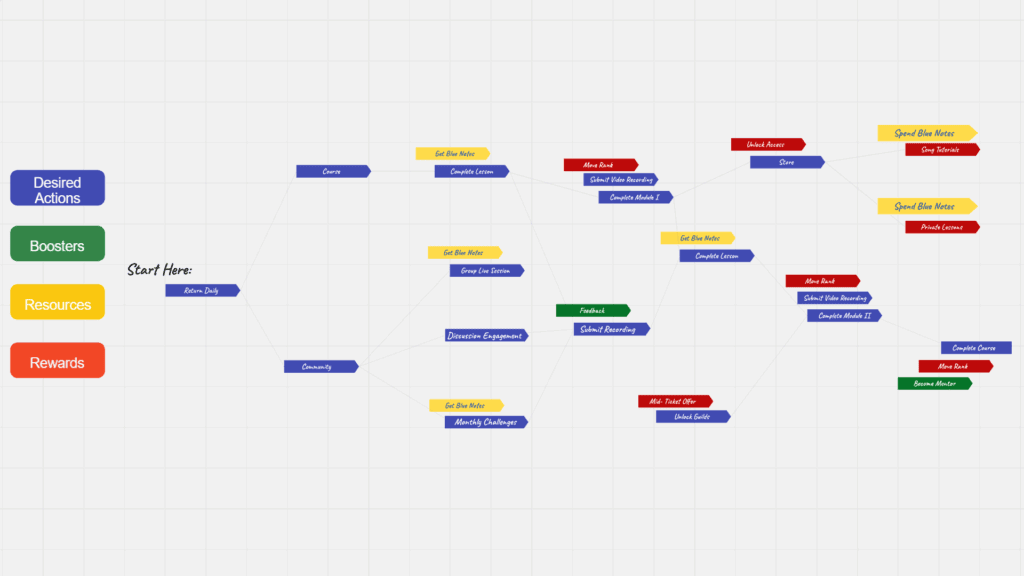
I designed the interaction system around a behavioral loop: meaningful actions create feedback, progress, and rewards that reinforce the next action.

Every reward in the system is attached to a behavior that makes someone a better musician.

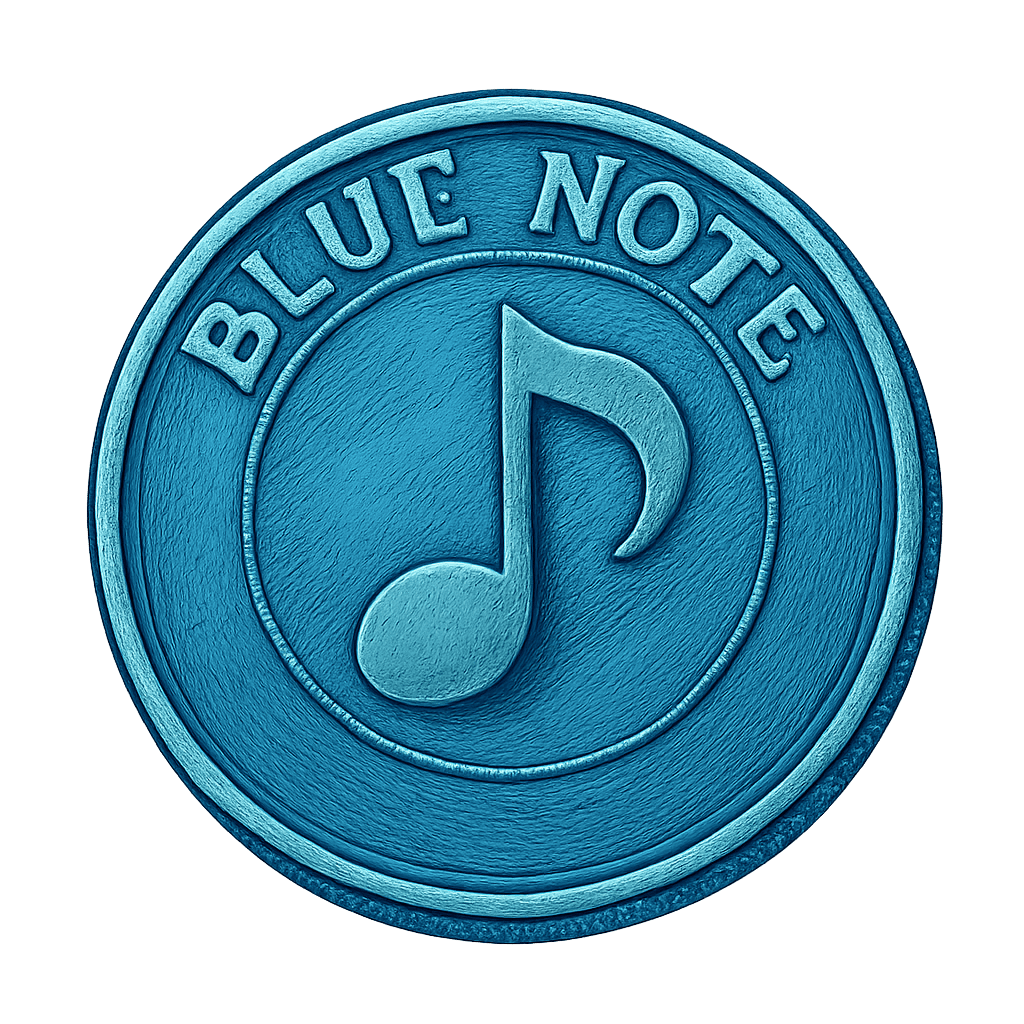
Blue Notes are the platform’s currency, earned by completing lessons, showing up to live sessions, and contributing to the community.

Students trade them in the store for additional content that enriches their learning journey.

Progression tracks musical capability, measured by what a student can play rather than how much content they have watched.

Ranks give learners a sense of identity and access to deeper parts of the experience.

Achievements name real musical milestones that introduce actual challenge

The system could now guide and reward progression. The next question was whether real users understood it, used it, and behaved as expected.

Milestone #6:
Usability Testing with Users

What happens after a student closes a lesson?

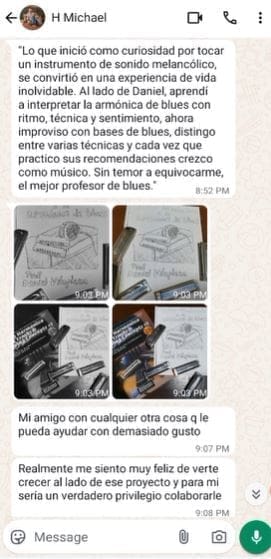
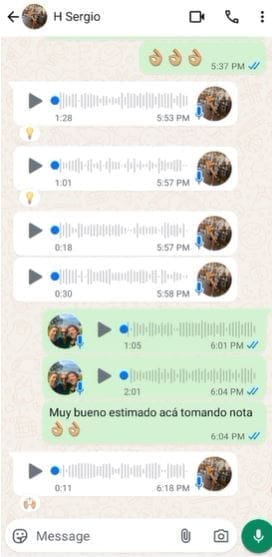
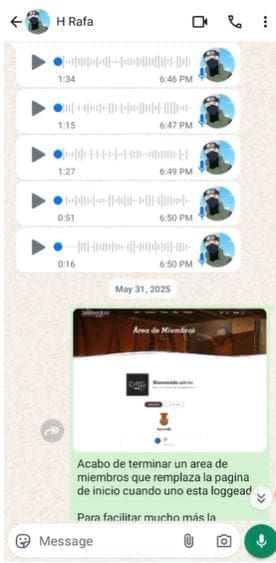
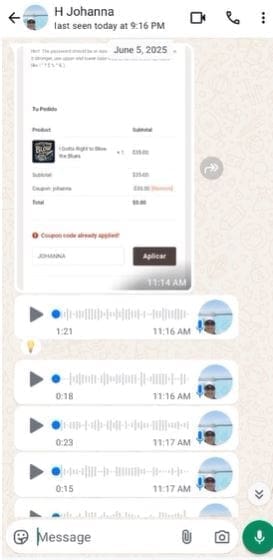
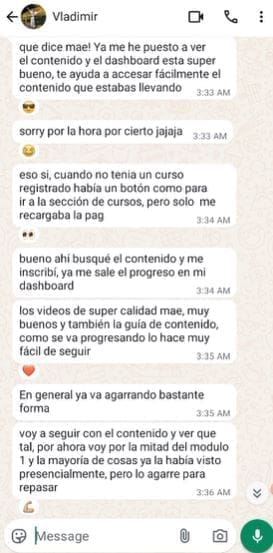
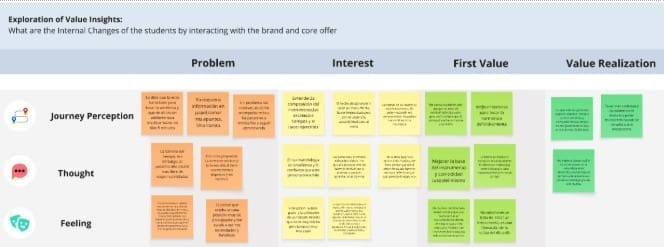
With V1 live, testing needed more than one method. I ran observational studies, contextual inquiries, and self-reporting through diary studies, each one catching what the others missed.

Sessions on a call showed me where the interface broke. Letting students explore alone and report back showed me how the product lived in their week, which is where the real findings came from.

Students reported back in voice notes and photos, from their own practice space, on their own schedule.

What Usage Revealed:

The Biggest Product
Insight

The barrier was uncertainty around how to practice.

What students said:

” I don’t have time to practice.”

What behavior showed:

Practice increased when a class or group session was approaching.

A commitment was the only thing organizing practice inside their week.

What was actually missing?

Structure.

Every student was facing the same unanswered questions:

– What should I practice today?
– What should I repeat?
– How long should I spend on it?
– What did I work on last time?
– Am I actually getting better?

Without clear structure practice became ambiguous, created friction, and was easier to postpone.

Product Opportunity

Every student had motivation and enough material.
What was missing was a way to organize the practice itself.

They needed practice infrastructure.

Closing the Gap Between Learning and Practice

Turning ambiguity into structure: what to practice, for how long, what to repeat, and how to see progress.

The platform organized learning. The toolkit organizes practice.

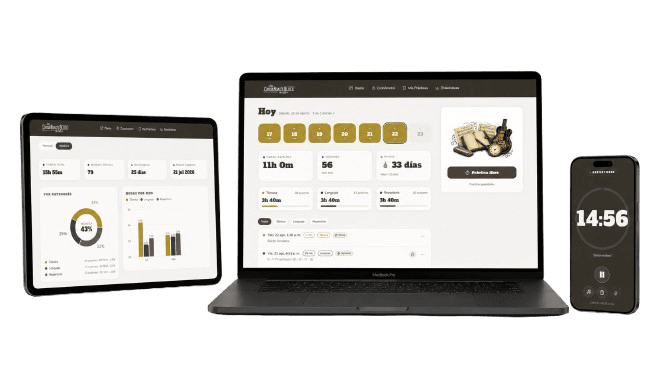
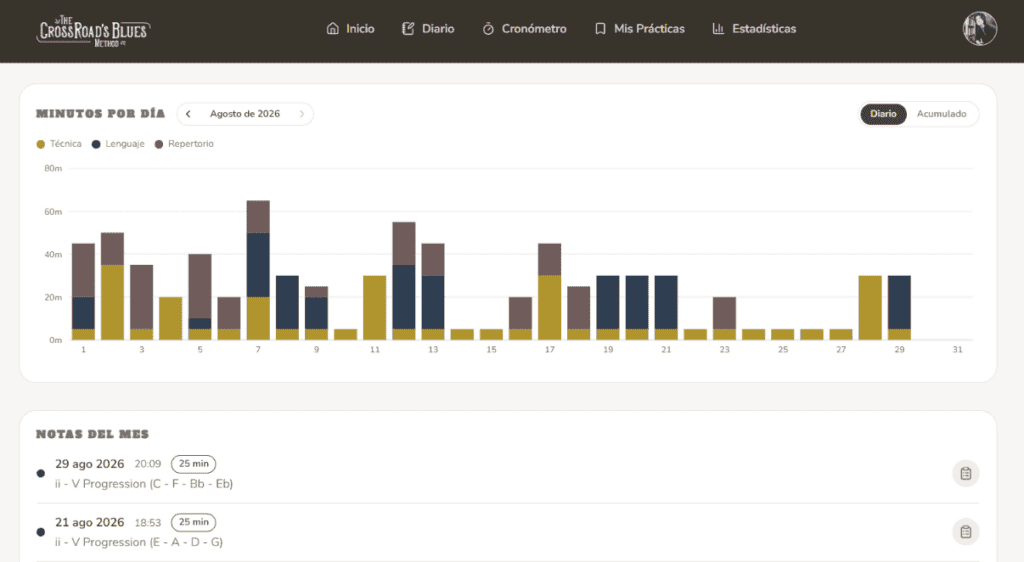
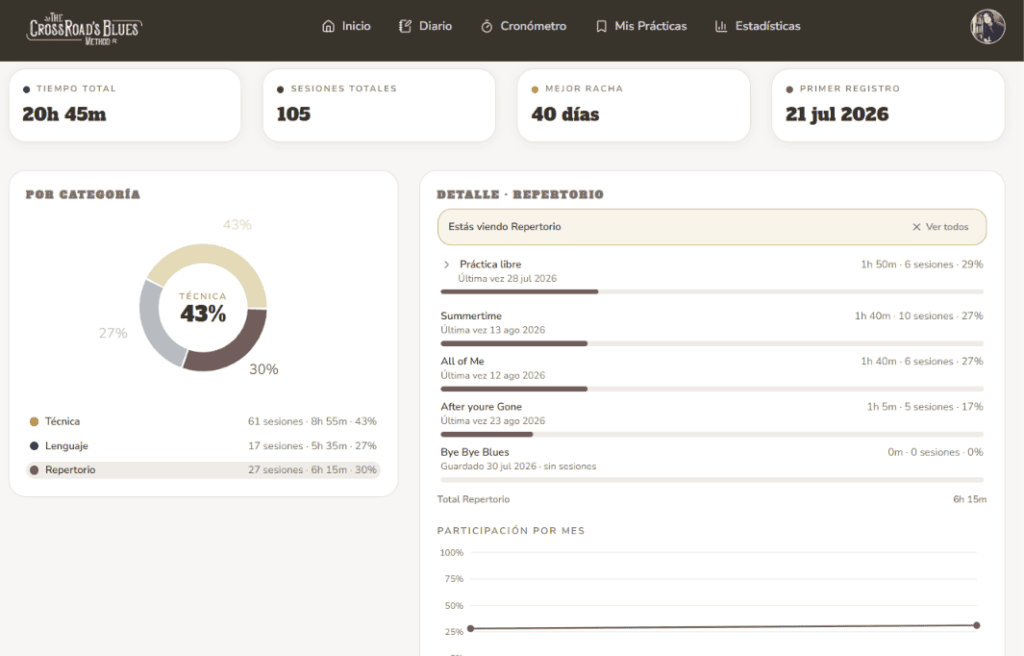
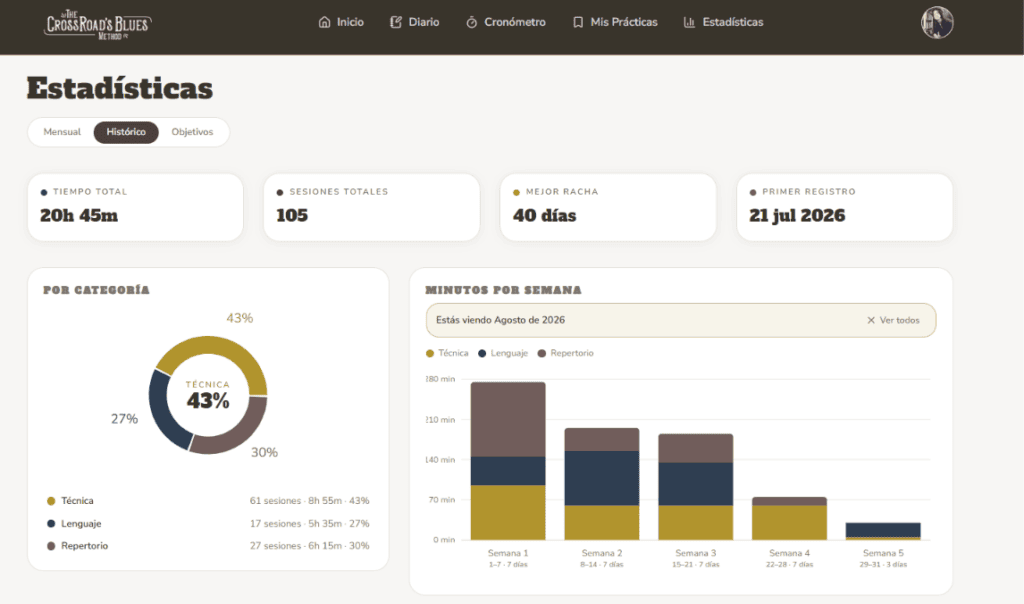
The Music Practice Toolkit

The tool was designed as the missing behavioral layer between lessons:

Plan what to practice
Practice with structure and time
Reflect on what happened
Measure progress over time
Repeat with clearer direction

The next product layer focused on turning course content into a repeatable routine built around three pillars: technique, language, and repertoire.

I became the user I was designing for…

To remove bias and experience the behavioral problem directly, I became a beginner again.

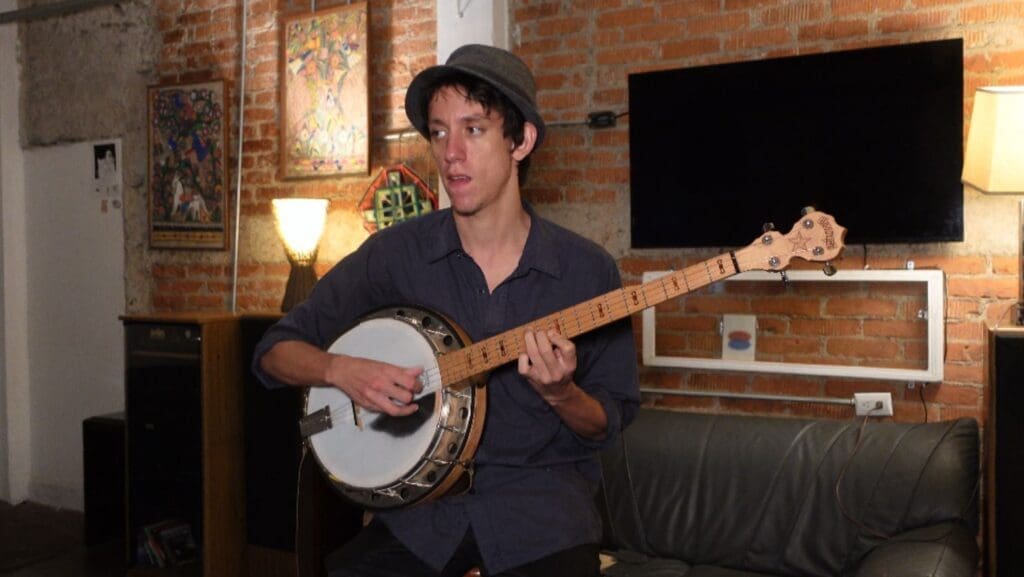
I picked up jazz banjo and used an unstructured third-party learning environment, then layered the Practice Toolkit on top of it to deal with the same friction my students dealt with.

The result was a consistent practice routine with measurable progress over 30 days.

The experiment confirmed that the toolkit could bridge instruction and independent practice extending Crossroads beyond the lesson and into the behavior that actually creates progress.

Where the Product Comes Together

Once the product had a complete behavioral system, it needed a place where all of the parts could finally connect.

This was the point where the product stopped feeling like a platform and started feeling like a living world.

By this point, the Crossroads Method had become more than a course platform.

It now contained a learning system and a practice system, each valuable on its own, but still needing a better place to live together.

The Homebase was designed as that junction.

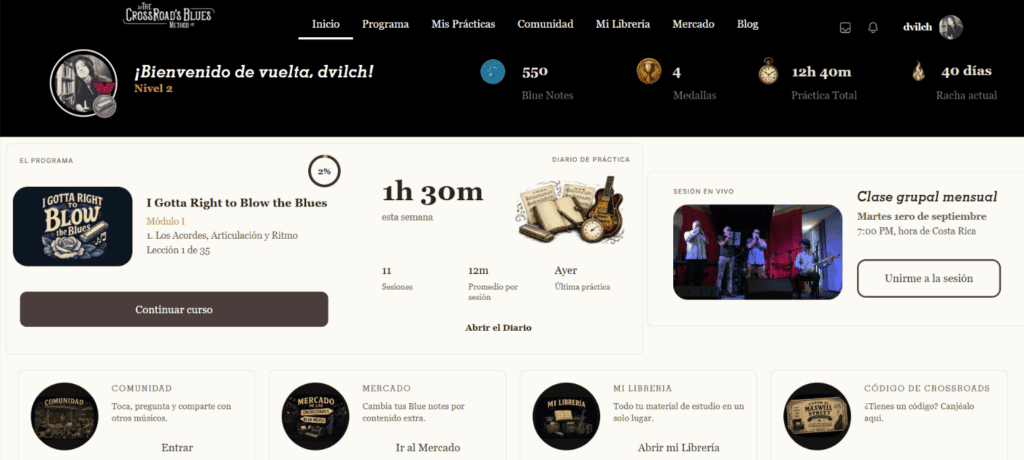
It gives students a place to return to between sessions: a single environment where they can continue the course, track practice momentum, reconnect with rewards and progress, see what is happening in the community, and decide what to do next.

It turns separate systems into one coherent experience.

Once the machine is skinned and alive, the system disappears and the world emerges.

The Next Chapter is Written by Users

The system now holds together: a course that teaches, a practice layer that turns learning into habit, and a Homebase where every part of the experience can live as one connected world.

The next uncertainty is market behavior at scale: what people do when they discover it, how they use it, where they stall, what they return for, and what they carry with them once they pass through it.

Building Crossroads moved me from doing many disciplines individually to orchestrating them around a product outcome.

The method that came out of it, Behavioral Systems Architecture, now shapes how I approach product decisions here and elsewhere.

It is the lens I bring to product work: business viability, market promise, and user transformation designed as one system rather than three isolated layers.

The next version of this story will not be about what I designed. It will be about what people actually do with it.

Scroll to Top